
Kia EV6: Driving your vehicle
Contents:
- Before driving
- EV button
- Gear shift
- Gear position
- Shifting conditions not met, Reduce speed, then shift
- Regenerative braking system
- To operate
- To operate
- Smart regeneration system
- Smart regeneration system will be temporarily canceled when:
- You are driving on a curved road.
- Brake system
- Brake disc cleaning
- Electronic stability control (ESC) operation
- Vehicle stability management (VSM) operation
- Drive mode integrated control system
- ECO mode
- All Wheel Drive (AWD) system: (if equipped)
- Before driving
- Charging door operation
- Active air flap
- Vehicle auto shut-off function
- Special driving conditions
- Snowy or icy conditions
- Trailer towing: (if equipped)
- Following distance
- Weight of the trailer
- Vehicle load limit
- Vehicle weight
Before driving
Before entering your Kia EV6, carefully inspect both the vehicle and the surrounding area. After entering the vehicle, several important checks should be completed before starting your journey to ensure safe and efficient operation.
Before entering the vehicle
-
Verify that all Kia EV6 windows, exterior mirrors, cameras, and exterior lighting components are clean and unobstructed.
-
Inspect the Kia EV6 tires for proper inflation, visible damage, or abnormal wear.
-
Check underneath the Kia EV6 for any signs of fluid leakage or unusual conditions.
-
If you plan to reverse the Kia EV6, ensure there are no people, animals, bicycles, or obstacles behind the vehicle.
Before starting
-
Close and securely lock all Kia EV6 doors.
-
Adjust the driver’s seat position so all Kia EV6 controls can be reached comfortably and safely.
-
Fasten your seat belt properly before driving.
-
Adjust both the interior and exterior rearview mirrors for maximum visibility.
-
Confirm that all Kia EV6 lighting systems operate correctly.
-
Check all instrument cluster gauges and vehicle information displays.
-
Verify the proper operation of the warning lights when the EV button is switched to the DRIVE READY or POWER ON position.
-
Release the parking brake and ensure the Kia EV6 brake warning indicator switches OFF.
For safe and confident driving, become fully familiar with the Kia EV6 controls, features, safety systems, and available equipment before operating the vehicle.
WARNING
Check Surroundings
Before shifting the Kia EV6 into D (Drive) or R (Reverse), always inspect the surrounding area carefully for pedestrians, cyclists, and especially children.
WARNING
Loose Objects
Secure all loose objects inside the Kia EV6 cabin. During sudden braking, rapid steering input, or emergency maneuvers, unsecured items may slide onto the floor and interfere with brake or accelerator pedal operation, potentially causing an accident.
WARNING
Proper Footwear
Always wear appropriate footwear while driving the Kia EV6. Shoes such as high heels, sandals, ski boots, oversized footwear, or slippery shoes may interfere with proper brake and accelerator pedal control.
WARNING
Driving While Intoxicated
Never operate the Kia EV6 while under the influence of alcohol. Even a small amount of alcohol can impair reaction time, judgment, perception, and driving ability.
Driving under the influence of drugs or medications may be equally or even more dangerous than driving while intoxicated.
WARNING
Distracted driving
Always focus on the road while operating the Kia EV6. The driver’s primary responsibility is the safe and legal control of the vehicle.
Using handheld devices, infotainment features, or any system that distracts the driver should be avoided while driving the Kia EV6.
WARNING
California Proposition 65
Vehicle exhaust, automotive components, interior materials, and certain fluids used in the Kia EV6 may contain or emit chemicals recognized by the State of California as substances that can cause cancer, birth defects, or reproductive harm.
EV button ➤
Gear shift ➤
Gear position ➤
Shifting conditions not met, Reduce speed, then shift ➤
Regenerative braking system ➤
To operate ➤
To operate
-
Pull the left-side Kia EV6 paddle shifter until regenerative braking level 3 is selected.
-
Pull the left-side paddle shifter once more while regenerative braking level 3 is active.
-
Confirm that the Kia EV6 i-Pedal indicator symbol appears on the instrument cluster display.
-
CAUTION
When the Kia EV6 is stopped or parked using i-Pedal on steep hills or inclines, always keep the brake pedal depressed to help prevent unintended vehicle movement.
Smart regeneration system ➤
Smart regeneration system will be temporarily canceled when: ➤
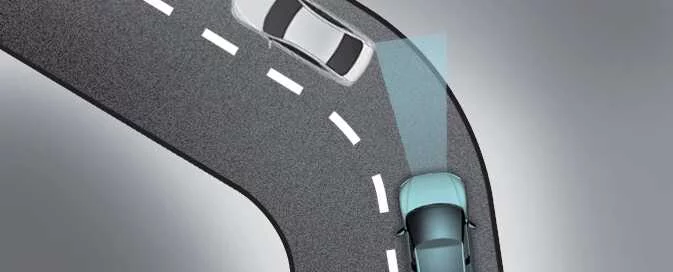
You are driving on a curved road.
|
While driving through a curve, the Kia EV6 radar sensor may temporarily lose detection of the vehicle ahead in the same lane. In this situation, the regenerative braking level may automatically decrease, creating the sensation that the vehicle is accelerating unexpectedly.
If the system suddenly detects the vehicle ahead again, the regenerative braking level may increase automatically, causing the vehicle to decelerate more strongly than anticipated.
Always maintain a safe following distance and apply the brake pedal manually whenever additional deceleration is required.
|
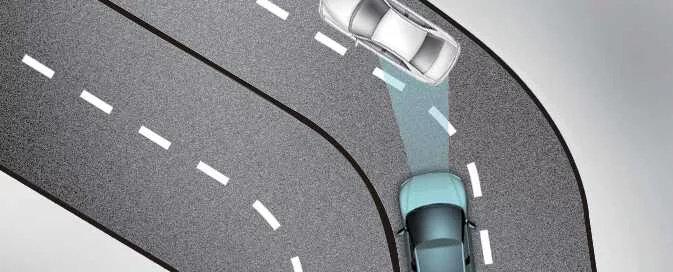
When traveling along curved roads, the smart regeneration system in the Kia EV6 may incorrectly identify a vehicle located in an adjacent lane as being directly ahead. In this case, the regenerative braking force may increase unnecessarily and slow the vehicle.
Always monitor surrounding traffic conditions carefully. If necessary, press the brake pedal to maintain a safe distance or use the accelerator pedal to prevent unwanted deceleration caused by incorrect vehicle recognition.
Drivers should continuously observe road and traffic conditions around the Kia EV6 during operation.
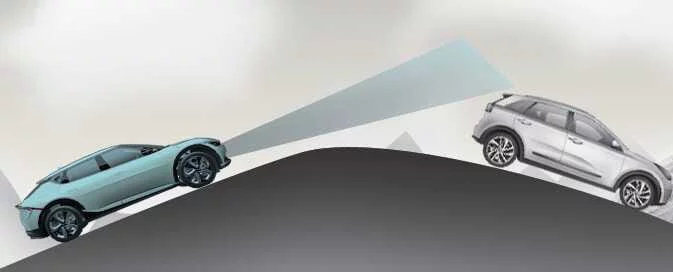
Driving on a sloped road
|
When driving uphill or downhill, the front radar sensor may not properly recognize vehicles traveling ahead within the same lane. As a result, the Kia EV6 Smart Regeneration System may automatically reduce regenerative braking force, making the vehicle feel as though it is accelerating.
If the vehicle ahead is suddenly recognized again, the regenerative braking intensity may rapidly increase and create a stronger deceleration effect.
The driver must always maintain a safe braking distance and manually operate the brake pedal whenever additional slowing is necessary to ensure safe vehicle control.
On steep downhill roads, regenerative braking force alone may not provide sufficient deceleration. If the Kia EV6 does not slow down adequately, immediately apply the brake pedal to reduce vehicle speed safely.
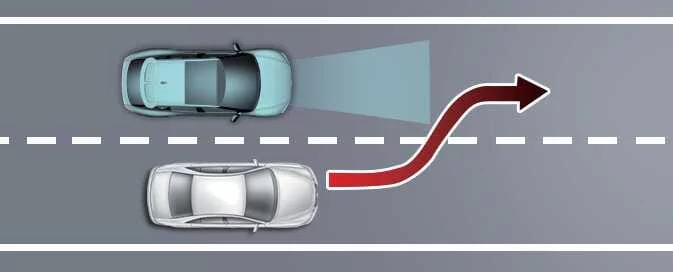
Changing lanes
|
If another vehicle suddenly enters your lane, the Kia EV6 Smart Regeneration System may not recognize it immediately, especially during abrupt lane changes or aggressive merging maneuvers. In such situations, maintain a safe following distance and use the brake pedal if additional deceleration becomes necessary.
Recognizing the vehicle
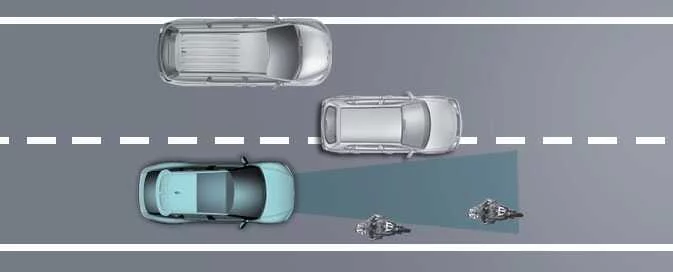
|
The front radar sensor in the Kia EV6 may not correctly detect certain vehicles or road users, including:
-
Narrow vehicles such as motorcycles, scooters, or bicycles.
-
Vehicles positioned partially outside the lane.
-
Slow-moving vehicles or vehicles that decelerate suddenly.
-
Stopped vehicles. If the vehicle ahead moves away, the system may not immediately recognize a stationary vehicle.
-
Vehicles with a minimal rear profile, such as unloaded trailers.
The radar sensor may also have difficulty accurately recognizing vehicles ahead under the following conditions:
-
When the front of the vehicle points upward because of excessive cargo weight in the luggage compartment.
-
While actively steering the vehicle.
-
When driving close to one side of the lane.
-
When traveling on narrow roads or curved sections of roadway.
If necessary, the driver should directly control the Kia EV6 speed using either the accelerator or brake pedal.
WARNING
When operating the Kia EV6 Smart Regeneration System, always observe the following safety precautions:
-
If emergency braking is required, press the brake pedal immediately.
-
Always maintain a safe following distance appropriate for current road conditions and driving speed. Following another vehicle too closely at high speed may lead to a severe collision.
-
Ensure adequate braking distance at all times and manually slow the vehicle using the brake pedal whenever necessary.
-
The smart regeneration system relies on radar signals to detect vehicles ahead. It cannot reliably recognize pedestrians, oncoming traffic, bicycles, motorcycles, shopping carts, strollers, luggage, or other small objects.
-
Vehicles frequently changing lanes ahead of your Kia EV6 may delay system response time or cause the radar sensor to react to vehicles traveling in adjacent lanes. Always drive carefully and remain prepared for sudden traffic changes.
-
The Smart Regeneration System may not correctly interpret complex or rapidly changing traffic situations. Drivers must always stay attentive and control vehicle speed responsibly.
NOTE
The Kia EV6 Smart Regeneration System may temporarily stop functioning under the following circumstances:
-
Electrical interference affecting radar operation.
-
Modified suspension components or altered ride height.
-
Uneven tire wear or incorrect tire pressure.
-
Installation of different tire types or non-recommended tire specifications.
This device complies with Part 15 of the FCC rules.
Operation is subject to the following two conditions:
-
This device may not cause harmful interference, and
-
this device must accept any interference received, including interference that may cause undesired operation.
TIP
Changes or modifications not expressly approved by the responsible compliance authority may void the user’s permission to operate this equipment.
Brake system ➤
Brake disc cleaning ➤
Electronic stability control (ESC) operation ➤
Vehicle stability management (VSM) operation ➤
Drive mode integrated control system ➤
ECO mode ➤
All Wheel Drive (AWD) system: (if equipped) ➤
Before driving ➤
Charging door operation
-
Verify that all four tires on the Kia EV6 are inflated to the recommended tire pressure specifications.
-
Position the rear wheels on the roll tester for the speedometer test, exactly as shown in the illustration.
-
Release the Electronic Parking Brake completely before beginning the test.
-
Place the front wheels onto the temporary free rollers as illustrated.
WARNING
-
Never install tires or wheels on the Kia EV6 that differ from the factory-recommended size or type. Incorrect tire or wheel specifications may negatively affect vehicle safety, handling performance, steering stability, or rollover resistance, potentially resulting in serious injury.
-
Never start or operate the Kia EV6 while the AWD vehicle is supported only by a jack. The vehicle may slip, move unexpectedly, or fall from the jack, causing severe injury or death.
-
Keep away from the front of the Kia EV6 while the vehicle is running in gear on a dynamometer or testing equipment. Unexpected forward movement may cause serious injury or fatal accidents.
Active air flap ➤
Vehicle auto shut-off function
If the Kia EV6 remains powered on for an extended period without driver activity, the vehicle auto shut-off function automatically powers the vehicle down to help prevent unnecessary battery discharge and electric power loss.
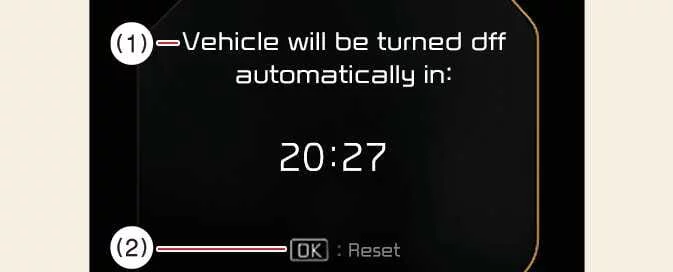
|
|
Operating conditions
The Kia EV6 Vehicle Auto-Shut Off timer activates when the following operating conditions are met:
-
Not Auto-Shut Off timer reset condition
-
The Kia EV6 is not in the POWER ON position or Utility Mode is activated.
-
The shifter is positioned in a gear other than P (Park).
-
The brake pedal is pressed instead of the accelerator pedal.
-
The driver’s seat belt and passenger seat belt remain fastened.
-
The front passenger seat is occupied.
-
The Kia EV6 moves at speeds above 2 mph (3 km/h).
-
When 10 minutes remain before automatic shut-off, a notification appears on the instrument cluster. Pressing the OK button resets the Auto-Shut Off timer.
-
-
The infotainment head unit is not performing a software update.
-
An external charging connector is not engaged and exterior V2L functionality is not being used.
-
If you wish to disable the auto shut-off feature while using interior V2L functionality, activate Utility Mode in the Kia EV6.
System operation
If all operating conditions are satisfied continuously for approximately 90 minutes, the Kia EV6 automatically shuts off to preserve electrical power and battery capacity.
Special driving conditions ➤
Snowy or icy conditions ➤
Trailer towing: (if equipped) ➤
Following distance ➤
Weight of the trailer
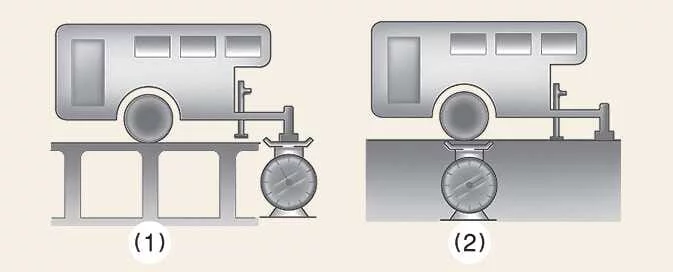
|
|
What is the maximum safe trailer weight for the Kia EV6?
The trailer should never exceed the maximum permitted trailer weight rating for trailers equipped with brakes.
Even when operating within official towing limits, trailer weight may still be excessive depending on road conditions, outside temperature, altitude, vehicle loading, and driving style.
Factors such as steep grades, frequent towing, hot weather, high-speed driving, and trailer aerodynamics all influence safe towing capability and overall Kia EV6 performance.
The ideal trailer weight may also vary depending on optional towing equipment or additional accessories installed on the Kia EV6.
Weight of the trailer tongue
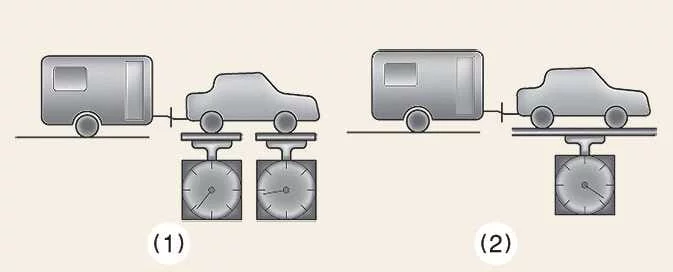
|
|
The trailer tongue load is an important measurement because it directly affects the Gross Vehicle Weight (GVW) of the Kia EV6.
This total weight includes the vehicle curb weight, passengers, cargo, luggage, accessories, and trailer tongue weight.
When towing a trailer, the tongue weight must always be added to the total vehicle load because the Kia EV6 is supporting that additional weight.
For proper towing balance and stability, the trailer tongue weight should not exceed 10% of the total loaded trailer weight and must remain within the maximum permissible trailer tongue load rating.
After loading the trailer, weigh both the trailer and the tongue separately to verify that all towing weights remain within approved Kia EV6 specifications.
If the measured weights are incorrect, adjust cargo placement inside the trailer to improve weight distribution and towing stability.
WARNING
Trailer
-
Never load a trailer with excessive weight concentrated at the rear. Approximately 60% of the total trailer load should be positioned toward the front section of the trailer, while approximately 40% should remain toward the rear.
-
Never exceed the maximum towing limits of the Kia EV6, trailer hitch, trailer coupler, or towing equipment.
Improper trailer loading may result in severe vehicle damage, trailer instability, loss of control, or personal injury.
Whenever possible, verify towing weights using a commercial vehicle scale or certified weighing station.
-
An improperly loaded trailer may cause dangerous trailer sway, poor handling, increased stopping distance, or complete loss of control of the Kia EV6.
The following weight chart contains important towing weight considerations for the Kia EV6. For additional details, refer to the Reference Weight section regarding trailer towing specifications.
Vehicle load limit ➤
Vehicle weight
This chapter explains how to correctly load the Kia EV6 and, when applicable, a trailer, so that the total loaded vehicle weight remains within the approved design limits.
Proper loading helps preserve the handling, braking, stability, tire performance, electric driving efficiency, and overall durability designed into the Kia EV6.
Before loading the vehicle, become familiar with the following weight-related terms used in the vehicle specifications and certification label.
Base curb weight This is the weight of the vehicle including a full tank of fuel and all standard equipment. It does not include passengers, cargo or optional equipment.
Vehicle curb weight This is the weight of your new Kia EV6 at the time of delivery from the dealer, plus any aftermarket equipment that has been installed afterward.
Cargo weight This figure includes all additional weight added to the Base Curb Weight, including luggage, cargo, accessories, and optional equipment.
GAW (Gross axle weight) This is the total weight placed on each axle, front and rear, including vehicle curb weight and all payload carried by the Kia EV6.
GAWR (Gross axle weight rating) This is the maximum allowable weight that can be carried by a single axle, either front or rear. These values are listed on the compliance label. The total load on each axle must never exceed its GAWR.
GVW (Gross vehicle weight) This is the Base Curb Weight plus actual Cargo Weight plus passengers.
GVWR (Gross vehicle weight rating) This is the maximum allowable weight of the fully loaded Kia EV6, including all options, equipment, passengers, cargo, and luggage. The GVWR is shown on the certification label located on the driver’s door sill.


Other information:
Kia EV6 2022-2026 Owner's Manual: Wipers and washers
The Kia EV6 windshield wiper and washer systems help remove rain, snow, dirt, dust, and other foreign materials from the windshield and rear window to maintain clear visibility while driving. The Kia EV6 wiper system is designed to improve driver visibility and overall driving safety during changing weather conditions. Wiper speed control (front) HI – High-speKia EV6 2022-2026 Owner's Manual: Limitations of Blind-Spot Collision-Avoidance Assist
The Kia EV6 Blind-Spot Collision-Avoidance Assist system may operate unexpectedly, become temporarily limited, or fail to detect surrounding vehicles properly under certain road, weather, traffic, or environmental conditions. Because the Kia EV6 Blind-Spot Collision-Avoidance Assist system relies on radar sensors and electronic detection technology, detection performance can vary depending on surrounding obstacles, road geometry, weather, and driving behavior.
Contents
- Before driving
- EV button
- Gear shift
- Gear position
- Shifting conditions not met, Reduce speed, then shift
- Regenerative braking system
- To operate
- To operate
- Smart regeneration system
- Smart regeneration system will be temporarily canceled when:
- You are driving on a curved road.
- Brake system
- Brake disc cleaning
- Electronic stability control (ESC) operation
- Vehicle stability management (VSM) operation
- Drive mode integrated control system
- ECO mode
- All Wheel Drive (AWD) system: (if equipped)
- Before driving
- Charging door operation
- Active air flap
- Vehicle auto shut-off function
- Special driving conditions
- Snowy or icy conditions
- Trailer towing: (if equipped)
- Following distance
- Weight of the trailer
- Vehicle load limit
- Vehicle weight
Categories
- Manuals Home
- Kia EV6 Owners Manual
- Questions & Answers
- Video Guides
- Useful Resources
- New on site
- Most important about Kia EV6
- Privacy Policy
