
Kia K4: Driving your vehicle / Brake system
Contents:
- Electronic Parking Brake (EPB)
- AUTO HOLD
- Anti-lock Brake System (ABS)
- Electronic Stability Control (ESC)
- Hill-start Assist Control (HAC)
- Vehicle Stability Management (VSM)
- Good braking practices
Your Kia K4 is equipped with a sophisticated, high-performance power-assisted braking system, an electronic parking brake, and a suite of advanced active safety braking technologies designed to ensure your confidence and safety in all driving conditions.
Power-assisted brakes
-
In the event that the power-assisted brakes lose power—for instance, due to an unexpected engine stall—you can still bring the Kia K4 to a stop by applying significantly more force to the brake pedal than usual. Please be aware that under these conditions, the vehicle’s stopping distance will be substantially increased.
-
When the engine is not running, the reserve vacuum or pressure in the power brake system is depleted each time you engage the brake pedal. Therefore, avoid pumping or repeatedly engaging the pedal if the power assist has been interrupted to preserve the remaining stopping power of your Kia K4.
-
On slippery surfaces, engage the brake pedal only as much as necessary to maintain steering control and prevent wheel lock-up.
-
Driving through deep water can result in "wet brakes," which may temporarily impair the stopping ability of your Kia K4 and cause the vehicle to drift to one side during braking. Always test your brakes lightly after clearing deep water to determine if performance has been affected. If the brakes feel unresponsive, gently apply the brake pedal while maintaining a safe forward speed until the heat generated dries the brake components and performance returns to normal.
WARNING
Steep hill braking
To prevent the overheating of brake components, avoid continuous engagement of the brake pedal when descending long or steep hills. Instead, manually shift the Kia K4 to a lower gear to utilize engine braking. Constant "riding" of the brakes can lead to thermal fade, which could result in a dangerous, temporary reduction in braking performance.
NOTE
Brake pedal
Do not drive with your foot resting on the brake pedal. Even light pressure can cause the brakes to drag, leading to abnormally high temperatures that result in premature wear of the brake linings and pads in your Kia K4.
TIP
-
Under certain environmental or driving conditions, you may hear minor noises when applying the brakes. This is generally a normal characteristic of the material and does not indicate a malfunction of your Kia K4 brake system.
-
If you have been driving on roads where de-icing chemicals (road salt) have been applied, you may notice unusual noises or surface abrasion on the discs. Periodically engage the brake pedal firmly under safe traffic conditions to help clear these corrosive chemicals from the brake discs and pads.
In the event of brake failure
If the service brakes in your Kia K4 fail to operate while the vehicle is in motion, you can execute an emergency stop by gradually applying the parking brake. Please note that the required stopping distance will be significantly greater than during normal operation. It is important to know that the Kia K4 braking systems are engineered with dual-circuit redundancy to ensure that total brake failure is an extremely rare event, typically only occurring under extraordinary circumstances.
NOTE
Parking brake
Avoid applying the parking brake to stop your Kia K4 while it is in motion, except in absolute emergency situations. Applying the parking brake while the Kia K4 is traveling at normal road speeds can cause a sudden loss of vehicle stability and control. If you are forced to use the parking brake to assist in stopping your Kia K4, exercise extreme caution and maintain a firm grip on the steering wheel.
Brake over accelerator
In the unlikely event that the accelerator pedal becomes stuck or entrapped, immediately engage the brake pedal with steady and firm pressure to decelerate your Kia K4 and effectively reduce engine power. The electronic systems in your Kia K4 are engineered to prioritize the brake pedal input over the accelerator pedal input, ensuring you retain the ability to stop.
If you encounter an unintended acceleration issue, follow these emergency steps:
-
Firmly engage the brake pedal and bring the Kia K4 to a safe and controlled stop.
-
Shift the transmission into P (Park), turn the ignition off, and fully apply the parking brake.
-
Inspect the accelerator pedal area for any floor mat interference or foreign objects.
If no physical interference is found and the accelerator pedal remains stuck, contact an authorized Kia dealer to have your Kia K4 professionally inspected and repaired.
Disc brake wear indicator
The Kia K4 features an integrated disc brake wear indicator designed to alert you when your brake pads have reached their service limit. When the pads are significantly worn and require replacement, you will hear a distinct high-pitched warning sound emanating from the front or rear brakes. You may notice this sound intermittently, or it may occur consistently whenever you apply pressure to the brake pedal.
To maintain balanced braking performance, always replace the front or rear brake pads as complete sets (pairs).
WARNING
Brake wear
Do not ignore high-pitched squealing or grinding sounds from your brakes; these are critical indicators of brake pad wear. Ignoring these warnings will eventually lead to a significant loss of braking performance, which could result in a serious accident or collision.
NOTE
Replace brake pads
Do not continue to drive your Kia K4 if you suspect the brake pads are worn. Operating the vehicle with severely worn pads can lead to metal-on-metal contact, which may cause permanent damage to the brake rotors and lead to significantly more expensive repair costs.
TIP
Brake dust accumulation on the wheels is a normal byproduct of operation, even under standard driving conditions. Some degree of dust is inevitable as the brake pads wear against the rotors, and this accumulation may occasionally contribute to audible noise during light braking.
Electronic Parking Brake (EPB) ➤
AUTO HOLD ➤
Anti-lock Brake System (ABS)
The Anti-lock Brake System (ABS) in your Kia K4 is a sophisticated active safety feature engineered to prevent wheel lock-up during hard braking. By automatically modulating brake pressure, the system ensures that the wheels continue to rotate, allowing you to maintain steering control and directional stability, even in emergency braking scenarios.
It is important to remember that the ABS, and the associated Electronic Stability Control (ESC), cannot override the laws of physics. These systems do not prevent accidents caused by improper driving techniques, excessive speed, or dangerous maneuvers. Regardless of the advanced braking assistance in your Kia K4, always maintain a safe following distance from the vehicle ahead. Furthermore, you must proactively reduce your speed during challenging or unusual road conditions, including but not limited to:
-
Driving on rough, gravel-covered, or snow-packed roads.
-
Operating the Kia K4 with tire chains installed.
-
Traversing roads with irregular surfaces, such as those that are pitted, patched, or feature uneven surface heights.
Driving on these surfaces inherently increases the required stopping distance for your Kia K4, even when the ABS is fully operational.
The ABS continuously monitors wheel speed via dedicated sensors. If the system detects that a wheel is on the verge of locking—which would cause a skid—it rapidly modulates the hydraulic pressure to that specific brake, preventing the loss of traction. When you apply firm pressure to the brake pedal in an emergency, you may notice a "tik-tik" sound or a pulsating sensation in the pedal. This is entirely normal and indicates that the Kia K4 ABS is actively working to keep you safe.
To maximize the effectiveness of the ABS during an emergency, do not attempt to "pump" the brakes or manually modulate pedal pressure. Instead, apply the brake pedal as hard and as firmly as possible, allowing the Kia K4 computer to manage the braking force for you.
TIP
You may hear a subtle "click" or mechanical sound shortly after you start the vehicle and begin to move. This is a routine self-check performed by the ABS and confirms that the system is functioning properly in your Kia K4.
Even with the advanced capabilities of the Kia K4 ABS, the vehicle still requires adequate distance to come to a complete halt. Always slow down significantly before entering turns, as the ABS cannot counteract the effects of excessive speed through a corner.
Please note that on extremely loose or uneven surfaces, the ABS may actually result in a longer stopping distance compared to a conventional system; however, the critical benefit remains your ability to steer away from hazards during the stop.
The ABS warning light ( ) will illuminate for approximately 3 seconds whenever the vehicle is in the ON position. During this time, the system performs a comprehensive self-diagnosis. If the light turns off, the system is normal. If the warning light remains illuminated or turns on while driving, there may be a fault in the ABS. Have your Kia K4 checked by an authorized Kia dealer as soon as possible.
When driving on surfaces with very poor traction—such as black ice—if you have engaged the brake pedal for an extended duration, the ABS may operate continuously, which could cause the warning light to appear. In this situation, find a safe location to pull over and bring the vehicle to a complete stop. Restart your Kia K4; if the warning light remains off, the ABS is functioning normally. If it persists, seek professional service from an authorized Kia dealer.
TIP
If you have jump-started your Kia K4 due to a drained 12V battery, you may notice the vehicle does not drive as smoothly, and the ABS warning light may illuminate simultaneously. This is a common symptom of low system voltage and does not necessarily indicate a permanent ABS malfunction.
-
Do not attempt to pump the brakes while in this state.
-
Ensure the 12V battery is fully recharged before attempting to drive the vehicle normally, as proper electrical power is essential for the Kia K4 to maintain full safety system functionality.
Electronic Stability Control (ESC)
The Electronic Stability Control (ESC) system in your Kia K4 is an advanced safety feature designed to stabilize the vehicle during cornering. By actively monitoring steering input and vehicle movement, the ESC helps mitigate the risk of losing control, which could otherwise lead to a serious accident.
|
When the system detects potential instability, the ESC engages the brakes on individual wheels and intervenes with the engine management system to help keep the Kia K4 on its intended path.
It is important to understand that the ESC cannot prevent every accident. Factors such as excessive speed in turns, sudden or aggressive steering maneuvers, and hydroplaning on wet surfaces can quickly exceed the system's capabilities. Only a safe, attentive, and responsible driver can truly prevent accidents by maintaining appropriate speeds for road conditions and avoiding maneuvers that cause a loss of traction. Even with the advanced stability systems in the Kia K4, always adhere to defensive driving best practices.
WARNING
For maximum protection, always ensure all occupants wear seat belts. No electronic system, regardless of how advanced, can fully compensate for driver errors, negligence, or extreme driving conditions. Always prioritize responsible driving.
The ESC is an electronic aid designed to assist you in maintaining control under adverse conditions; it is not a substitute for prudent driving. Factors such as vehicle speed, road surface quality, and driver steering input directly affect the system's effectiveness. As the driver of your Kia K4, you remain responsible for navigating turns at reasonable speeds and maintaining a sufficient margin of safety at all times.
When you engage the brake pedal under conditions that might otherwise cause the wheels to lock, you may hear a rhythmic "tik-tik" sound or feel a vibration in the pedal. This is perfectly normal and indicates that the Anti-lock Brake System (ABS), which works in tandem with the ESC, is active.
TIP
You may occasionally hear a faint click sound from the cabin when your Kia K4 begins to move after startup. This is a normal diagnostic sound confirming that the vehicle systems are functioning correctly.
ESC operation
The ESC system in the Kia K4 operates under the following conditions:
-
When the ignition is in the ON position, the ESC and ESC OFF indicator lights will illuminate for approximately 3 seconds as a self-test, after which the system engages.
-
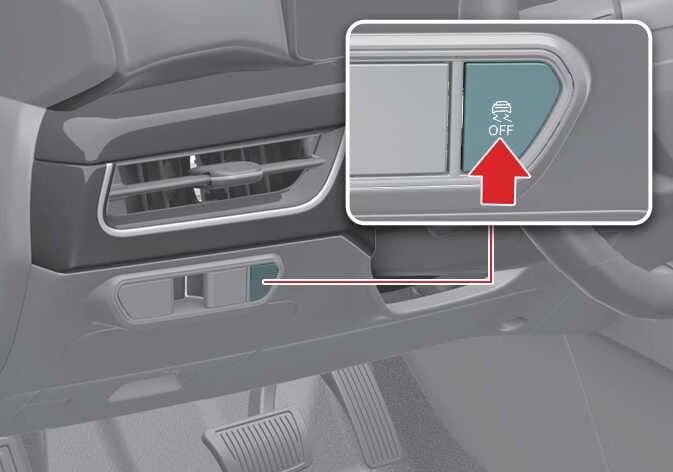
You can deactivate the system by pressing the ESC OFF button for at least half a second (the ESC OFF indicator will appear). To re-enable the ESC, simply press the button again.
-
Upon starting the Kia K4, a slight ticking sound may be heard. This is the ESC performing an automated self-check and does not indicate a system issue.
When the ESC system is actively intervening to stabilize the Kia K4, the ESC indicator light will blink. During this operation, you may feel a slight pulsation in the vehicle, which is standard.
If you are driving on a slippery road or stuck in mud, engaging the accelerator pedal may result in limited engine rpm increase; this is a function of the traction control system working to regain grip.
ESC operation OFF
Your Kia K4 features two distinct "OFF" states for the ESC. Note that if you turn the vehicle off while the ESC is disabled, the system will automatically re-enable upon your next restart to ensure your safety.
|
|
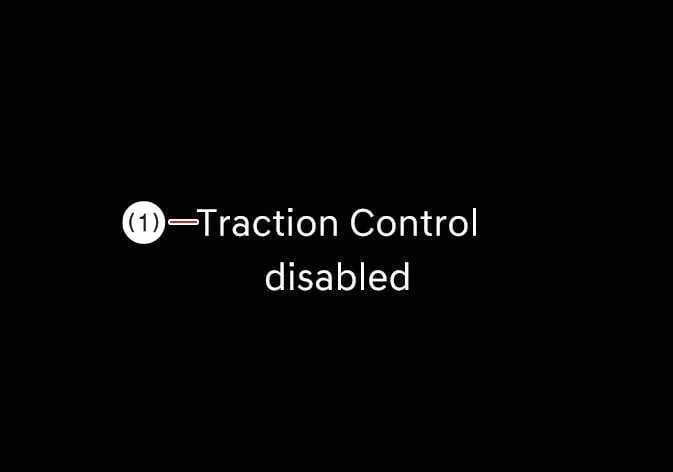
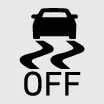
ESC OFF state 1: To disable the traction control function while retaining the ESC’s brake control intervention, press the ESC OFF button for less than 3 seconds. The ESC OFF indicator light will appear.
|
|
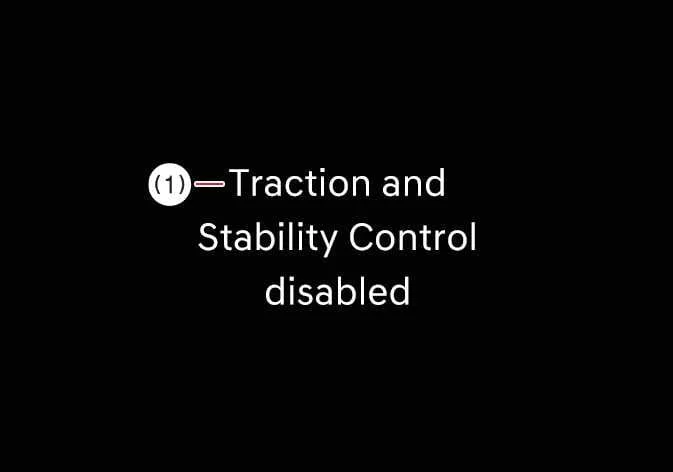
ESC OFF state 2: To fully disable both traction and brake control functions, press and hold the ESC OFF button for more than 3 seconds. The ESC OFF indicator will appear, and a warning chime will sound to confirm that the ESC system is now completely inactive.
Indicator light
|
|
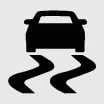
When the vehicle is in the ON position, the ESC OFF indicator light illuminates briefly and then disappears if the system is operating correctly. The ESC indicator light will blink when the system is actively assisting you or remain lit if a fault is detected.
WARNING
Always drive with extreme caution even when the ESC is active. The system is only an assistance tool and is not a replacement for safe, defensive driving habits.
ESC OFF usage
For your safety, keep the Kia K4 ESC system enabled whenever possible. Only deactivate the ESC via the button while driving on a stable, flat road surface if absolutely necessary.
WARNING
Never press the ESC OFF button while the ESC system is actively intervening (when the indicator light is blinking). Attempting to turn the system off while it is actively managing vehicle stability may cause you to lose control of your Kia K4.
NOTE
-
When testing the vehicle on a dynamometer, ensure the ESC system is turned off. If left active, the ESC may incorrectly limit engine power and vehicle speed, leading to a false diagnosis of a mechanical fault.
-
Deactivating the ESC system does not affect the operation of the ABS or your primary braking system.
Hill-start Assist Control (HAC)
Starting your Kia K4 on a steep incline can often be challenging, as vehicles naturally tend to roll backward when the brake pedal is released. The Hill-start Assist Control (HAC) system is designed to provide you with peace of mind by automatically engaging the brakes for approximately 2 seconds after you take your foot off the brake pedal, giving you ample time to transition to the accelerator.
The HAC system will automatically release the braking pressure once the 2-second interval has elapsed, or immediately once you begin to engage the accelerator pedal to move the Kia K4 forward.
Because the HAC system is only active for a short duration, always be prepared to engage the accelerator pedal promptly after releasing the brake to ensure a smooth, forward takeoff.
WARNING
Maintaining brake pressure on an incline
HAC is an assistive feature and does not replace the necessity of using the brake pedal when stopped on an incline. While the Kia K4 is stationary, always maintain sufficient brake pressure to prevent any rollback that could lead to an accident. Do not remove your foot from the brake pedal until you are fully prepared to accelerate.
Vehicle Stability Management (VSM)
The Vehicle Stability Management (VSM) system in your Kia K4 further enhances directional stability and optimizes steering response, especially when the vehicle is operated under demanding driving scenarios. The VSM system works seamlessly to coordinate the Electronic Stability Control (ESC) and the Motor-Driven Power Steering (MDPS) to help you maintain control under the following conditions:
-
When driving on slippery, icy, or loose road surfaces.
-
When the Kia K4 detects a significant difference in the coefficient of friction between the wheels on the left and right sides of the vehicle.
WARNING
Tire and wheel size
To ensure the VSM system functions as designed, always use tires and wheels that match the original factory specifications. Installing tires or wheels of varying sizes may disrupt the system's calibration and significantly diminish the supplemental safety benefits provided by the VSM in your Kia K4.
VSM operation
During normal operation, the VSM system works behind the scenes. You may occasionally notice a slight pulsation or subtle adjustments in the steering feedback (MDPS) as the system corrects the vehicle's path. This behavior is entirely normal and confirms that the Kia K4 is actively assisting you.
Please note that the VSM system will not operate under the following conditions:
-
When you are driving on a heavily banked road, such as a sharp gradient or extreme incline.
-
When the Kia K4 transmission is shifted into R (Reverse).
-
When the ESC OFF indicator light is illuminated on the instrument cluster, signaling that the stability systems are deactivated.
-
When the MDPS (steering system) indicator light remains on, indicating a fault in the steering unit.
VSM operation OFF
If you choose to press the ESC OFF button to disable the stability systems, the VSM system will also be cancelled. When this occurs, the ESC OFF indicator light (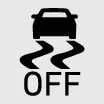 ) will appear on your display.
To reactivate the VSM system and restore full stability control, simply press the ESC OFF button again; the indicator light will extinguish, confirming the system is back in operation.
WARNING
VSM management
Even with the advanced VSM technology, you must drive with heightened awareness. VSM only provides assistance in maintaining vehicle control under specific circumstances. It remains your ultimate responsibility as the driver to maintain safe driving habits and adapt to the environment.
Malfunction indicator
There may be instances where the VSM deactivates automatically, even without you pressing the ESC OFF button. This indicates that a potential malfunction has been detected within the MDPS or VSM modules. If the ESC indicator light or the MDPS warning light remains illuminated while driving, you should have your Kia K4 inspected by an authorized Kia dealer as soon as possible.
The VSM is strictly a supplementary safety function and is not a replacement for safe, cautious driving practices. It is your responsibility to monitor your speed, maintain a safe following distance from vehicles ahead, and keep a firm grip on the steering wheel at all times.
Your Kia K4 is engineered to respond predictably to your steering and braking inputs, even with VSM active. Always follow standard precautions for driving at safe speeds, especially during inclement weather, or when traversing irregular or slippery road surfaces.
WARNING
For maximum protection, always ensure all passengers wear their seat belts. No safety system, no matter how advanced, can compensate for all potential driver errors or hazardous driving conditions. Always drive your Kia K4 responsibly.
Good braking practices
Adopting consistent and proper braking habits is essential for maintaining the safety of all occupants and ensuring the long-term reliability of the braking system in your Kia K4. Following these professional guidelines will help you manage vehicle control effectively and reduce premature component wear.
-
Before putting the Kia K4 in motion, always verify that the parking brake is fully released and that the corresponding warning light on the instrument cluster is completely off.
-
Driving through deep puddles or floodwaters may saturate your brake pads and rotors. Similarly, brakes can become saturated during a thorough vehicle wash. Wet brakes are a significant safety hazard as they do not provide optimal friction, leading to increased stopping distances and the potential for the Kia K4 to pull to one side during an emergency stop.
To dry your brakes, gently and lightly engage the brake pedal while driving at a safe, controlled speed until braking response returns to its normal, firm feel. If performance does not recover, pull over to a secure location as soon as it is safe to do so and have your Kia K4 inspected by an authorized Kia dealer.
-
Never "coast" down long hills with the Kia K4 transmission in Neutral or out of gear. This is extremely dangerous. Always maintain the vehicle in gear, utilizing the engine’s resistance to control your speed, and apply the brakes as needed. On steeper descents, manually shift to a lower gear to allow engine braking to assist in maintaining a safe, constant speed.
-
Avoid "riding" the brake pedal—the habit of keeping your foot lightly on the brake while driving. This practice causes the brake system to overheat, which leads to "brake fade" (loss of effectiveness) and causes unnecessary, accelerated wear on the brake pads and rotors of your Kia K4.
-
In the unfortunate event of a tire blowout while driving, maintain a firm grip on the steering wheel, keep the vehicle pointed straight, and gently apply the brake pedal. Do not brake abruptly. Gradually reduce your speed and guide the Kia K4 to a safe location off the roadway once you have reached a manageable speed.
-
Exercise caution when parking your Kia K4 on an incline. Always engage the parking brake firmly and ensure the transmission is shifted into P (Park). If facing downhill, turn your front wheels toward the curb so the tire hits the curb if the vehicle rolls. If facing uphill, turn the front wheels away from the curb. In areas without a curb or on particularly steep slopes, it is highly recommended to place wheel blocks behind the tires as an extra precaution.
-
In freezing conditions, moisture or slush near the rear brake assembly can cause the parking brake to freeze in the engaged position. If there is a risk of freezing, only apply the parking brake temporarily to shift into P (Park). Immediately block the rear wheels with a sturdy object to prevent movement, then release the parking brake to prevent it from seizing.
-
Never attempt to hold the Kia K4 stationary on an incline by pressing the accelerator pedal. This practice can cause the transmission to overheat and result in significant mechanical damage. Always use the service brake pedal or the electronic parking brake to secure the vehicle.


Other information:
Kia K4 (CL4) 2025-2026 Owner's Manual: Front seat adjustment for power seat:
The Kia K4 features intuitive power-operated driver's seat adjustments, controlled via the switches mounted on the outboard side of the seat cushion. Before operating your Kia K4, always configure your seat to a position that provides effortless access to the steering wheel, foot pedals, and all instrument panel controls to ensure safe and attentive driving.Kia K4 (CL4) 2025-2026 Owner's Manual: Inside rearview mirror
Adjust the inside rearview mirror so that you can view the entire rear window clearly from your driving position. Ensure this adjustment is finalized before you begin your journey in the Kia K4. To maintain a clear view, avoid placing bulky items, boxes, or passengers in the rear seat or cargo area that could obstruct the rear window visibility. WARNING Mirror adjustment For your safety, never attempt to adjust the rearview mirror while the Kia K4 is in motion.
Contents
- Electronic Parking Brake (EPB)
- AUTO HOLD
- Anti-lock Brake System (ABS)
- Electronic Stability Control (ESC)
- Hill-start Assist Control (HAC)
- Vehicle Stability Management (VSM)
- Good braking practices
Categories
- Manuals Home
- Kia K4 Owners Manual
- Questions & Answers
- Video Guides
- Useful Resources
- New on site
- Most important about Kia K4
- Privacy Policy
