
Kia EV6: Specifications
Contents:
- Dimensions
- Electric vehicle specifications
- Available front trunk weight
- Luggage volume
- Vehicle weight
- Reference weight when towing a trailer
- Air conditioning system
- Bulb wattage
- Tires and wheels
- Recommended lubricants and capacities
- Vehicle Identification Number (VIN)
- Vehicle certification label
- Tire specification and pressure label
- Motor number
- Air conditioner compressor label
- Refrigerant label
- How to check the symbol on the charging label: (if equipped)
Dimensions
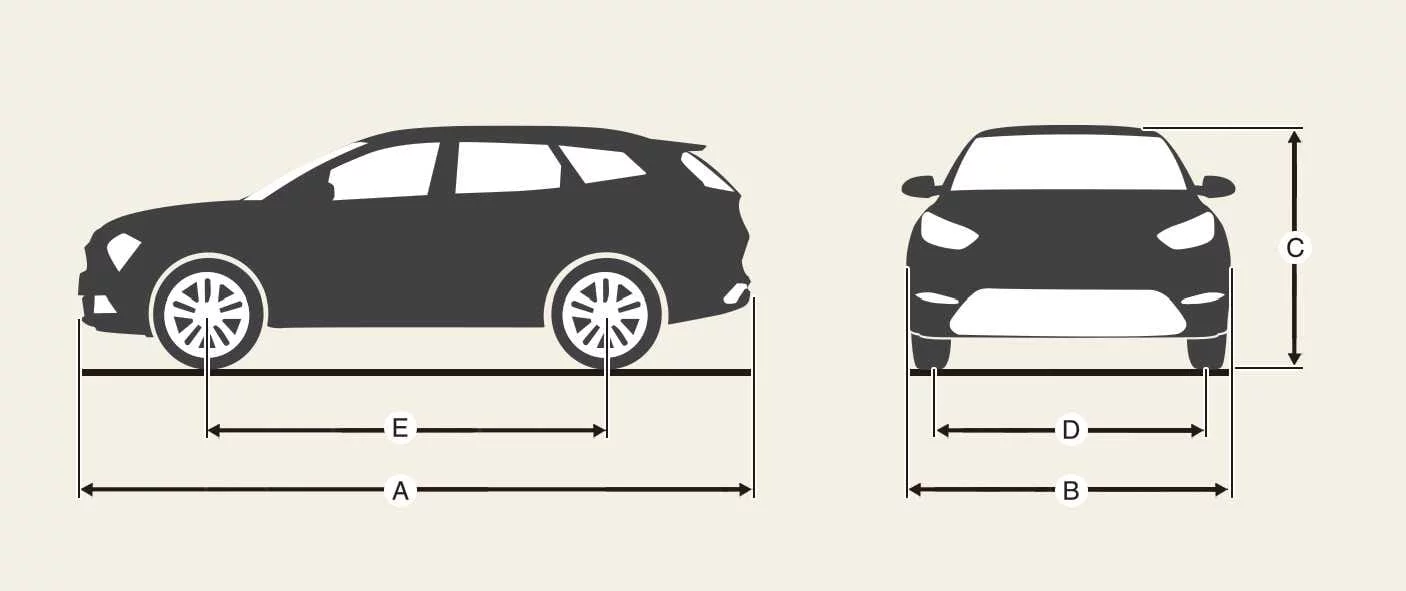
The dimensions of the Kia EV6 contribute to its balanced combination of interior spaciousness, aerodynamic performance, and stable road handling characteristics.
|
Item |
inches (mm) |
|||
|---|---|---|---|---|
|
A |
Overall length |
Type A |
184.8 (4,695) |
|
|
Type B (GT-Line) |
||||
|
B |
Overall width |
Type A |
74.0 (1,880) |
|
|
Type B (GT-Line) |
74.4 (1,890) |
|||
|
C |
Overall height |
Type A |
60.8 (1,545) |
|
|
Type B (GT-Line) |
||||
|
D |
Tread |
Front |
235/55 R19 |
64.2 (1,630) |
|
255/45 R20 |
64.0 (1,625) |
|||
|
Rear |
235/55 R19 |
64.6 (1,640) |
||
|
255/45 R20 |
64.4 (1,635) |
|||
|
E |
Wheelbase |
114.2 (2,900) |
||
Electric vehicle specifications
The Kia EV6 electric drivetrain has been engineered to deliver impressive acceleration, efficient energy management, and long-distance driving capability across multiple configurations.
|
Items |
Standard type |
Extended type |
|||
|---|---|---|---|---|---|
|
2WD |
2WD |
AWD |
|||
|
Motor |
Max. output (kW) |
Front |
- |
- |
74 |
|
Rear |
125 |
168 |
165 |
||
|
Max. torque (Nm) |
Front |
- |
- |
255 |
|
|
Rear |
350 |
350 |
350 |
||
|
Battery (Lithium-ion) |
Capacity (kWh) |
63 |
84 |
||
|
Charger (OBC) |
Max. output (kW) |
AC single phase |
10.9 |
10.9 |
|
The high-capacity battery system and advanced charging technology of the Kia EV6 support fast charging performance and efficient daily driving for a wide range of driving conditions.
Available front trunk weight
|
2WD |
AWD |
|---|---|
|
55 lbs. (25 kg) |
25 lbs. (10 kg) |
The practical front trunk storage area of the Kia EV6 provides additional cargo flexibility for charging cables, travel accessories, and small personal items, improving overall everyday usability.
Luggage volume
The Kia EV6 offers a versatile luggage compartment designed to provide practical storage capacity for daily commuting, long-distance travel, and family use. The intelligently engineered cargo area maximizes interior usability while maintaining the sleek aerodynamic profile of the vehicle.
|
Item |
Luggage Volume |
||
|---|---|---|---|
|
Type A |
Type B (GT-Line) |
||
|
Luggage volume (SAE) [cu ft (L)] |
MIN. |
24.4 cu ft. (690 L) |
|
|
MAX. |
46.7 cu ft. (1,322 L) |
||
The expandable cargo configuration of the Kia EV6 allows drivers to transport larger items easily by folding the rear seats, creating a flexible storage area suitable for luggage, sports equipment, or travel accessories.
Vehicle weight
The overall weight specifications of the Kia EV6 vary depending on drivetrain configuration, battery capacity, and installed equipment. Proper vehicle weight distribution contributes to ride stability, safety, and efficient electric driving performance.
|
Item |
Gross vehicle weight [lbs. (kg)] |
|
|---|---|---|
|
Standard type |
2WD |
5,114 (2,320) |
|
Extended type |
2WD |
5,456 (2,475) |
|
AWD |
5,687 (2,580) |
|
The advanced battery platform of the Kia EV6 has been carefully integrated into the chassis structure to help maintain balanced handling characteristics and a lower center of gravity.
Reference weight when towing a trailer
The Kia EV6 extended-range models are capable of towing selected trailer loads when equipped correctly. Always follow local towing regulations and ensure that the trailer weight does not exceed the recommended limits.
|
Item |
Weight (Standard type) |
Weight (Extended type) |
|
|---|---|---|---|
|
Maximum trailer weight |
With brake system |
- |
2,700 lbs. (1,224 kg) |
|
Without brake system |
- |
1,653 lbs. (750 kg) |
|
|
Maximum tongue weight |
- |
220 lbs. (100 kg) |
|
When towing with the Kia EV6, additional caution should be used during acceleration, braking, and cornering. Properly balanced trailer loading can improve stability and driving confidence.
Air conditioning system
The climate control system in the Kia EV6 is engineered to provide efficient cabin cooling and heating performance while optimizing electric energy consumption. Models equipped with a heat pump can further improve energy efficiency in colder conditions.
|
Item |
Weight of volume (g) |
Classification |
|
|---|---|---|---|
|
Refrigerant |
With heat pump |
850±25 |
R-1234yf |
|
Without heat pump |
750±25 |
R-1234yf |
|
|
Compressor lubricant |
180±10 |
POE |
|
To maintain optimal performance of the Kia EV6 air conditioning system, refrigerant servicing and inspections should always be performed by qualified technicians using approved equipment.
Bulb wattage
The Kia EV6 uses advanced LED lighting technology throughout most exterior and interior lighting systems. LED components provide improved visibility, energy efficiency, and long operational lifespan compared to traditional bulb systems.
|
Light bulb |
Bulb type |
Wattage (Watt) |
|
|---|---|---|---|
|
Front |
High beam |
LED |
LED |
|
Low beam |
LED |
LED |
|
|
Position and daytime running lamps |
LED |
LED |
|
|
Turn signal lamps |
LED |
LED |
|
|
Front side marker lamps |
LED |
LED |
|
|
Front trunk lamp |
LED |
LED |
|
|
Rear |
Stop and tail lamps |
LED |
LED |
|
Turn signal lamps |
LED |
LED |
|
|
Backup lamps |
LED |
LED |
|
|
Rear side marker lamps |
LED |
LED |
|
|
High mounted stop lamp |
LED |
LED |
|
|
License plate lamps |
LED |
LED |
|
|
Interior |
Map lamps |
LED |
LED |
|
Room lamps |
LED |
LED |
|
|
Vanity mirror lamps |
LED |
LED |
|
|
Glove box lamp |
W5W |
5W |
|
|
Luggage lamp |
LED |
LED |
|
The LED lighting configuration of the Kia EV6 contributes to enhanced nighttime visibility, modern styling, and reduced power consumption during operation.
Tires and wheels
The tire and wheel specifications for the Kia EV6 have been selected to deliver balanced ride comfort, stable handling, and efficient road performance under various driving conditions.
|
Item |
Tire size |
Wheel size |
Load capacity |
Speed capacity |
Inflation pressure [bar (psi, kPa)] |
Wheel lug nut torque kgf·m (lbf·ft, N·m) |
|||
|---|---|---|---|---|---|---|---|---|---|
|
LI *1 |
kg |
SS *2 |
km/h |
Front |
Rear |
||||
|
Full size tire |
235/55R19 |
7.5J X 19" |
101 |
825 |
H |
210 |
2.5 (36, 250) |
11–13 (79–94, 107–127) |
|
|
255/45R20 |
8.0J X 20" |
105 |
925 |
||||||
CAUTION
When replacing tires on the Kia EV6, always use the same tire size and specifications originally installed on the vehicle.
Installing incorrect tire sizes may negatively affect suspension components, vehicle stability systems, driving comfort, and overall handling performance.
NOTE
-
It is permissible to add 3 psi to the standard tire pressure specification if colder temperatures are expected soon.
Tires generally lose approximately 1 psi for every 12 °F drop in ambient temperature. Recheck tire pressure regularly during seasonal temperature changes to maintain optimal performance.
-
We recommend replacing the tires on your Kia EV6 with the same specifications originally supplied by the manufacturer to preserve proper driving dynamics and efficiency.
-
When driving at high altitudes, atmospheric pressure naturally decreases. Therefore, check the tire pressure frequently and add air if necessary.
Recommended additional tire pressure per km above sea level: 1.5 psi (10.5 kPa)/km
Recommended lubricants and capacities
For reliable operation and long-term durability of the Kia EV6, always use high-quality lubricants and fluids that meet the manufacturer’s specifications.
|
Lubricant |
Volume |
Classification |
||
|---|---|---|---|---|
|
Reduction gear fluid |
2WD |
Rear |
3.59–3.70 US qt. (3.4–3.5 L) |
SK ATF SP4M-1, MICHANG ATF SP4M-1, S-OIL ATF SP4M-1, Kia Genuine ATF SP4M-1 |
|
AWD |
Front |
3.38–3.49 US qt. (3.2–3.3 L) |
||
|
Rear |
3.59–3.70 US qt. (3.4–3.5 L) |
|||
|
Brake fluid |
As required |
SAE J1704 DOT-4 LV, FMVSS 116 DOT-4, ISO4925 CLASS-6 |
||
|
Coolant |
Standard type |
2WD |
18.70 US qt. (17.7 L) |
A Phosphate based ethylene glycol based coolant |
|
AWD |
18.91 US qt. (17.9 L) |
|||
|
Extended type |
2WD |
20.50 US qt. (19.4 L) |
||
|
AWD |
20.71 US qt. (19.6 L) |
|||
Using approved lubricants and fluids in the Kia EV6 helps maintain drivetrain efficiency, cooling performance, and long-term component protection.
Vehicle Identification Number (VIN)
The Vehicle Identification Number (VIN) is used for registration, ownership verification, insurance documentation, and other legal matters associated with your Kia EV6.
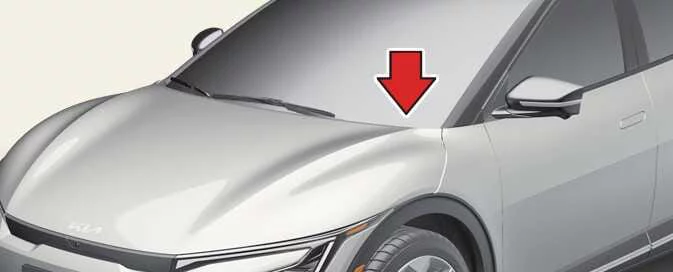
The VIN is stamped into the floor panel beneath the passenger seat area. To inspect the number directly, open the protective cover as illustrated.

|
The VIN is also displayed on a plate positioned at the top section of the instrument panel. This identification plate can be viewed from outside the Kia EV6 through the windshield.
|
Vehicle certification label
The vehicle certification label located on the driver-side center pillar also contains important information regarding the Kia EV6, including the VIN and compliance details.

|
Tire specification and pressure label
The tire specification and pressure label located on the driver’s side center pillar provides the recommended tire inflation values for safe and efficient operation of the Kia EV6.

|
The factory-installed tires supplied with the Kia EV6 are carefully selected to provide optimal ride comfort, grip, handling stability, and energy efficiency during normal driving conditions.
Motor number
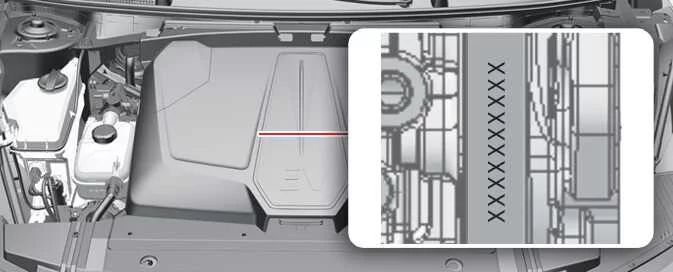
The motor number is stamped directly onto the motor housing as illustrated below. Depending on the drivetrain configuration of the Kia EV6, the motor number may be visible from underneath the vehicle.
|
|
Air conditioner compressor label
The air conditioner compressor label provides technical details regarding the installed compressor unit, including model information, supplier reference number, refrigerant type, and compressor oil specification.
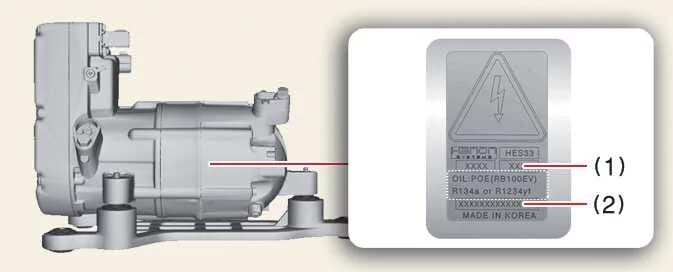
|
Refrigerant label
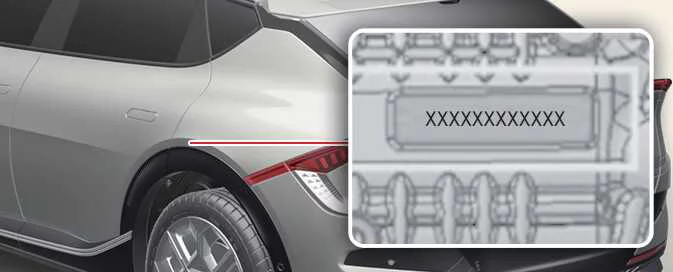
The refrigerant information label is positioned in the indicated location and contains important servicing details related to the Kia EV6 climate control system.
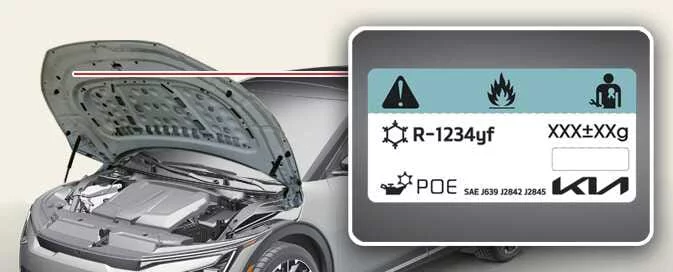
|
Always use the specified refrigerant and approved servicing procedures when maintaining the Kia EV6 air conditioning system to ensure reliability and environmental compliance.
How to check the symbol on the charging label: (if equipped)
The Kia EV6 charging label contains important information related to charging compatibility, voltage requirements, and electrical safety. Before connecting any charging equipment, carefully inspect the charging label to confirm that the charger specifications match the requirements of your Kia EV6.
|
Vehicle charging INLET |
|
|---|---|
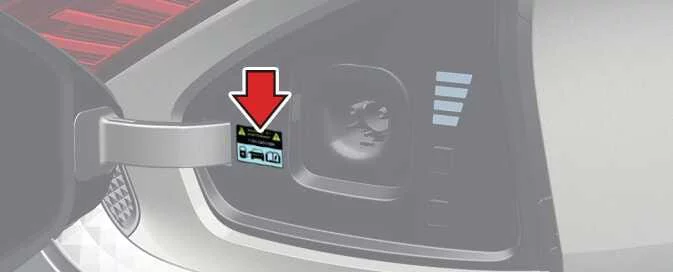
|
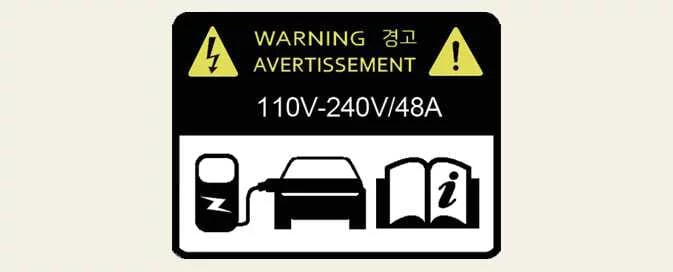
|
The charging inlet area of the Kia EV6 is designed to provide clear visual guidance for safe charging procedures. Always verify the charging specifications before using AC charging equipment or a portable charger.
Precautions for charging AC and Portable charger
-
After opening the charging door, carefully inspect the charging voltage and current information displayed in the center section of the warning label.
-
Once the voltage and current specifications have been confirmed, continue with the charging procedure for your Kia EV6.
-
Using a charging connector with symbols or specifications that do not match the charging label may create a risk of electrical malfunction, fire, charging interruption, injury, or vehicle system damage.
For maximum charging safety and battery protection, only use approved charging equipment compatible with the Kia EV6 electric vehicle system.
Electric charging label
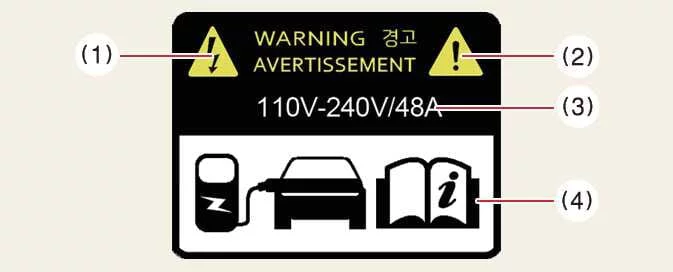
|
The electric charging label is attached to the inside section of the charging door for quick reference during charging operations.
1–2: Warning for high voltage
3: Charging voltage and current
4: Identifier for charging door.
The warning information displayed on the Kia EV6 charging label helps drivers identify proper charging conditions and avoid incompatible charging equipment.


Other information:
Kia EV6 2022-2026 Owner's Manual: Smart regeneration system will be temporarily canceled when:
Canceled manually The Smart Regeneration System temporarily turns off and the AUTO regenerative braking indication disappears from the Kia EV6 cluster display. Pull and hold the right-side paddle shifter for longer than 0.5 second. Canceled automatically The vehicle is shifted into N (Neutral), R (Reverse), or P (Park).Pull and hold the left-side ( ) Kia EV6 paddle shifter while coasting. When the Kia EV6 speed exceeds approximately 2 mph (3 km/h), the regenerative braking level returns to the previously selected setting after the paddle shifter is released. When the Kia EV6 speed drops below approximately 2 mph (3 km/h), vehicle stopping control remains active even after the paddle shifter is released.
Contents
- Dimensions
- Electric vehicle specifications
- Available front trunk weight
- Luggage volume
- Vehicle weight
- Reference weight when towing a trailer
- Air conditioning system
- Bulb wattage
- Tires and wheels
- Recommended lubricants and capacities
- Vehicle Identification Number (VIN)
- Vehicle certification label
- Tire specification and pressure label
- Motor number
- Air conditioner compressor label
- Refrigerant label
- How to check the symbol on the charging label: (if equipped)
Categories
- Manuals Home
- Kia EV6 Owners Manual
- Questions & Answers
- Video Guides
- Useful Resources
- New on site
- Most important about Kia EV6
- Privacy Policy
