
Kia Seltos: Features of your vehicle / Automatic climate control system
Contents:
The Kia Seltos automatic climate control system uses cooling, heating, air intake, fan speed, and air distribution control to help maintain a pleasant cabin environment. When AUTO mode is selected, the system automatically adjusts several settings to reach the selected temperature.
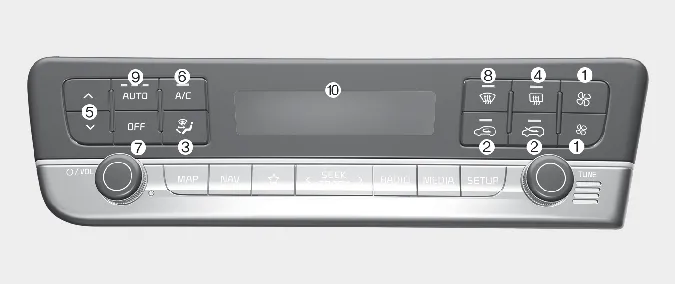
Type A
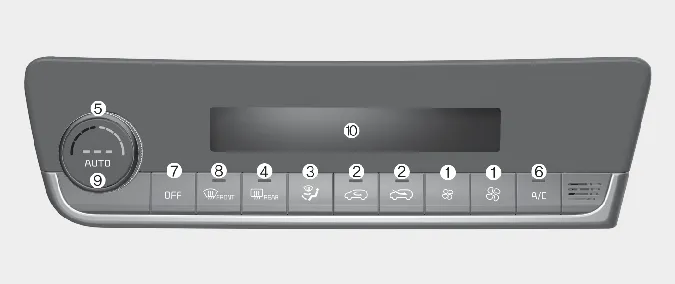
Type B
-
Fan speed control button
-
Air intake control button
-
Mode selection button
-
Rear window defroster button
-
Temperature control knob
-
Air conditioning (A/C) button
-
OFF button
-
Front windshield defroster button
-
AUTO automatic control button
-
Climate control display

NOTICE
Operating the blower when the ignition switch is in the ON position without the engine running may discharge the battery. Operate the blower with the engine running whenever possible.
Heating and air conditioning automatically
-
Press the AUTO button.
The airflow modes, fan speed, air intake, and air conditioning operation will be controlled automatically according to the selected temperature.
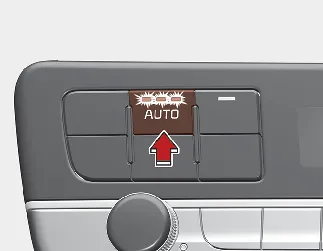
Type A
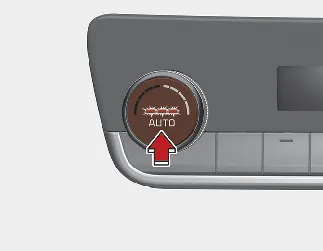
Type B
-
Press the temperature control button and turn the temperature control switch to the desired temperature.
The Kia Seltos climate control system is then automatically managed to maintain the selected cabin temperature as comfortably as possible.
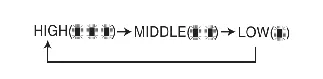

NOTICE
-
To turn automatic operation off, select any of the following buttons or switches:
-
Mode selection button
-
Air conditioning (A/C) button
-
Front windshield defroster button. Press the button again to deselect the front windshield defroster function, and the AUTO sign will appear on the information display again.
-
Fan speed control switch
The selected function will be controlled manually, while the remaining functions continue operating automatically.
-
-
For convenience and efficient climate control performance, use the AUTO button and set the temperature to 72 °F (22 °C).

NOTICE
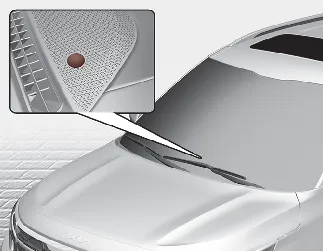
Do not place anything over the sensor located on the instrument panel. Keeping this sensor clear helps the Kia Seltos automatic heating and cooling system control cabin temperature more accurately.
Mode selection
The mode selection button controls the direction of airflow through the Kia Seltos ventilation system. By choosing the proper mode, the driver can direct air toward the face, floor, windshield, or a combination of these areas for better comfort and visibility.
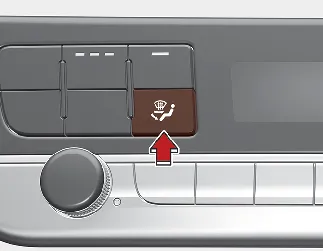
Type A
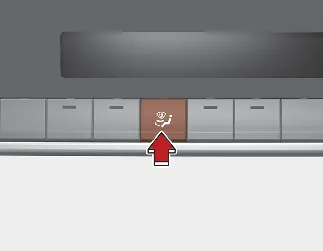
Type B
The airflow outlet ports are switched in the following sequence:

 Face-Level (B, D, F)
Airflow is directed toward the upper body and face. Each outlet can be adjusted to guide the discharged air in the desired direction.
 Bi-Level (B, C, D, E, F)
Airflow is directed toward both the face and the floor, helping provide balanced cabin comfort in the Kia Seltos.
 Floor-Level (A, C, D, E)
Most of the airflow is directed toward the floor, while a small amount of air is directed to the windshield, side window defrosters, and side air vents.
 Floor/Defrost-Level (A, C, D, E)
Most airflow is directed toward the floor and windshield, with a small amount directed to the side window defrosters and side air vents.
 Defrost-Level (A, D)
Most airflow is directed toward the windshield, with a small amount of air sent to the side window defrosters and side air vents.


Other information:
Kia Seltos SP2 (2021-2026) Owner's Manual: Navigation-based Smart Cruise Control (NSCC)
Navigation-based Smart Cruise Control (NSCC) in the Kia Seltos can help maintain an appropriate driving speed according to road conditions when driving on highways or motorways. While Smart Cruise Control is operating, NSCC uses road information from the navigation system to support smoother and safer highway driving. NOTICE NSCC is available only on controlled-access roads of certain highways.Kia Seltos SP2 (2021-2026) Owner's Manual: Air bag - advanced Supplemental Restraint System
* The actual air bags and their locations in your Kia Seltos may differ from the illustration depending on model, trim, and equipment. Driver's front air bag Passenger's front air bag Side air bag Curtain air bag Even in vehicles equipped with air bags, the driver and all passengers must always wear the safety belts provided.