
Kia K4: Maintenance / Tires and wheels
Contents:
- Tire terminology and definitions
- Tire sidewall labeling
- Wheel size designation
- Tire speed ratings
- Tread wear
- Traction: AA, A, B, and C
- Temperature: A, B, and C
- Checking tire inflation pressure
- Tire maintenance
- Wheel alignment and tire balance
- Tire rotation
- Tire traction
- Tire replacement
- Wheel replacement
- All-season tires
- Summer tires
- Snow tires
- Tire chains
- Radial-ply tires
- Low aspect ratio tires
For consistent vehicle performance, long-term safety, and optimal fuel economy, it is essential that you always maintain the recommended tire pressures and operate the Kia K4 within the specified load limits and weight distribution guidelines.
Recommended cold tire inflation pressures
For the most accurate readings, check all tire pressures while the tires are "cold." A cold tire is defined as one that has been sitting stationary for at least 3 hours, or has been driven for less than 1 mile (1.6 km) since it was started.
Maintaining the correct pressure is the single most effective way to ensure a smooth ride, precise vehicle handling, and uniform tread wear across your Kia K4.
Detailed tire pressure specifications, including recommended PSI for various load conditions, can be found in the "Tires and wheels" section of your owner's manual.
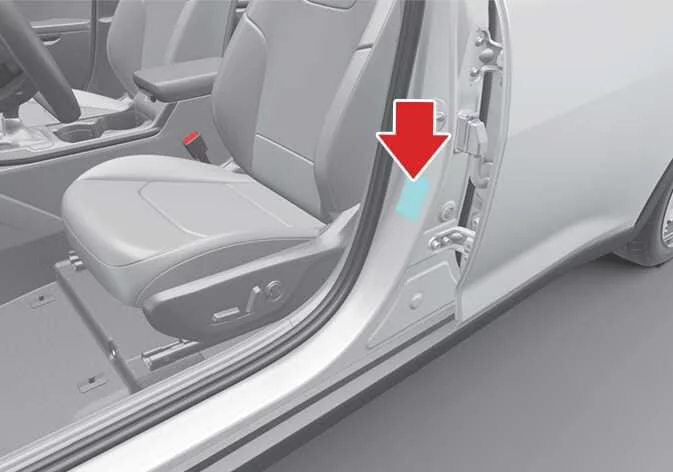
For quick reference, all tire size specifications and pressure requirements specific to your Kia K4 configuration are printed on the official vehicle certification label attached to the driver-side center pillar (B-pillar).
|
CAUTION
Tire underinflation risks
Always inflate your Kia K4 tires according to the exact specifications provided in your owner's manual. We recommend checking your tire inflation pressure at least twice a month, and always before embarking on long-distance trips. Neglecting this routine maintenance can lead to underinflated tires, which not only compromises the driving stability of your Kia K4 but also increases the risk of structural tire damage and total tire failure. The danger of operating with underinflated tires is significantly elevated during high-temperature days and when driving at sustained high speeds for extended periods.
Failure to maintain the specified tire pressure may result in a variety of negative consequences, including rapid or uneven tread wear, sluggish vehicle handling, decreased fuel efficiency, permanent deformation of the tire structure or wheel rims, harsh ride quality, and increased susceptibility to damage from road hazards like potholes or debris.
Tire pressure maintenance guidelines
To keep your Kia K4 running reliably, please follow these core recommendations:
-
Always measure tire pressure when the tires are cold (as defined by the vehicle being stationary for 3+ hours or driven less than 1 mile).
-
If your Kia K4 is equipped with a spare tire, ensure you check its pressure every time you check the primary four tires to ensure it is ready for emergency use.
-
Never exceed the maximum GVWR (Gross Vehicle Weight Rating) of your Kia K4. Be particularly mindful not to overload the roof luggage rack, as this alters the vehicle's center of gravity and increases stress on the tires.
-
Remember that warm tires naturally exhibit higher pressure than cold tires, usually increasing by 4–6 psi (28–41 kPa) during operation. Never release air from warm tires to "adjust" the pressure, as this will result in the tires being underinflated once they cool down.
WARNING
Tire inflation safety
Both overinflation and underinflation will significantly reduce the lifespan of your tires, adversely impact the handling characteristics of your Kia K4, and potentially lead to sudden tire blowout or failure. Such an event can cause a dangerous loss of vehicle control, putting you and your passengers at risk of serious injury.
Tire terminology and definitions ➤
Tire sidewall labeling
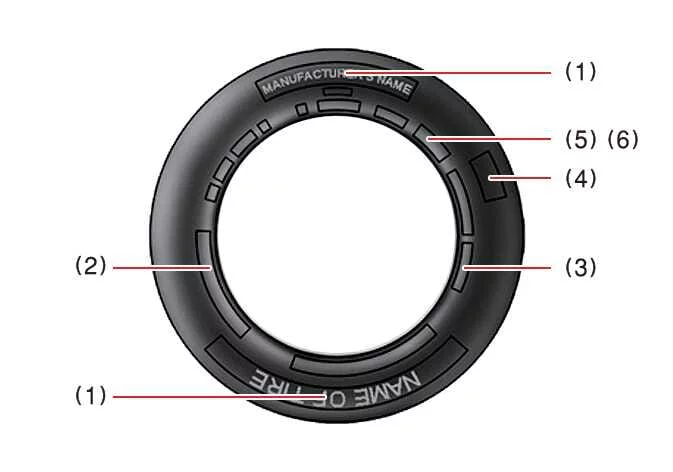
The information molded into the sidewall of your tires identifies the fundamental physical characteristics of the product and displays the Tire Identification Number (TIN), which is essential for safety standard certification and tracking. Understanding these markings helps you maintain the performance and safety of your Kia K4.
|
The TIN is a critical identifier used to track tires, particularly in the event of a manufacturer safety recall. Always keep this information in mind when inspecting the tires installed on your Kia K4.
1. Manufacturer or brand name
The sidewall prominently displays the manufacturer's name or brand identity, indicating the source of the tire's engineering.
2. Tire size designation
Every tire sidewall is marked with a specific size designation. You will need this precise information when selecting replacement tires to ensure they meet the factory standards for your Kia K4. The following example breakdown explains what the various letters and numbers represent.
(These figures are provided for illustrative purposes only; the actual tire size designation for your Kia K4 may vary based on your specific trim level and wheel options.)
Example tire size designation:
P255/45R20 105V
-
P: Applicable vehicle type (tires with a "P" prefix are intended for passenger vehicles; however, note that many modern tires for the Kia K4 may not feature this specific prefix).
-
255: The width of the tire measured in millimeters from sidewall to sidewall.
-
45: The aspect ratio, which expresses the tire's section height as a percentage of its overall width.
-
R: The tire construction code, indicating a Radial ply design.
-
20: The rim diameter measured in inches.
-
105: The Load Index, a numerical code corresponding to the maximum load-carrying capacity of the tire.
-
V: The Speed Rating symbol. Refer to the speed rating chart below to understand the maximum safe operating speed for this specific tire.
Wheel size designation
Wheel rims are also marked with essential technical data required if you ever need to replace a damaged rim on your Kia K4. The following example explains the standard formatting for these markings.
Example wheel size designation:
8.5JX20
-
8.5: The width of the rim measured in inches.
-
J: The specific rim contour designation.
-
20: The rim diameter in inches.
Tire speed ratings
The chart below outlines many common speed ratings utilized for passenger vehicle tires. The speed rating is an integral part of the tire size designation on the sidewall and corresponds to the tire's designed maximum safe operating speed under controlled conditions. Maintaining tires that meet or exceed the speed rating requirements for your Kia K4 is vital for safe high-speed operation.
| Speed Symbol | Maximum Speed |
|---|
Pro Tip: When upgrading or replacing wheels and tires on your Kia K4, always ensure the new components maintain the same load and speed rating as the original factory equipment to avoid compromising vehicle handling or safety systems.
|
Speed Rating Symbol |
Maximum Speed Capability |
|---|---|
|
S |
112 mph (180 km/h) |
|
T |
118 mph (190 km/h) |
|
H |
130 mph (210 km/h) |
|
V |
149 mph (240 km/h) |
|
W |
168 mph (270 km/h) |
|
Y |
186 mph (300 km/h) |
3. Checking tire life
To ensure optimal performance and safety for your Kia K4, any tires that are more than 6 years old—calculated from the date of manufacture—should be replaced, regardless of remaining tread depth. You can locate the manufacturing date on the tire sidewall as part of the Department of Transportation (DOT) code. Note that this information may occasionally be located on the inner side of the wheel, requiring a visual inspection from beneath the vehicle.
The DOT code is a sequence of alphanumeric characters. The final four digits represent the production date:
DOT: XXXX XXXX OOOO
The initial segment of the code provides the plant identification, tire size, and tread pattern, while the terminal four numbers signify the specific week and year of production.
For example:
DOT XXXX XXXX 1625 indicates that the tire was manufactured during the 16th week of 2025.
WARNING
Tire age considerations for Kia K4
Rubber compounds degrade over time due to environmental factors, even if the vehicle is not driven frequently. Always replace your Kia K4 tires within the recommended timeframe. Neglecting this maintenance can lead to structural compromise and sudden tire failure, which poses a severe risk of losing vehicle control and resulting in an accident.
4. Tire ply composition and material
The term "tire ply" refers to the specific count of internal rubber-coated fabric layers that form the tire's structure. Manufacturers are required to list the materials used, which commonly include steel, nylon, and polyester. The following designations indicate the type of construction:
- R: Radial ply construction (standard for your Kia K4).
- D: Diagonal or bias ply construction.
- B: Belted-bias ply construction.
5. Maximum Inflation Pressure
This figure represents the absolute maximum air pressure that the tire is designed to safely contain. Never exceed this limit. For daily operation and optimal comfort in your Kia K4, please refer to the official Certification Label located on the driver-side door jamb for the specific recommended cold tire pressure.
6. Maximum load rating
This number indicates the maximum weight in kilograms and pounds that an individual tire is engineered to support. When shopping for replacement tires for your Kia K4, it is mandatory to select tires that meet or exceed the load rating specified by the original factory-installed equipment to ensure the suspension and safety systems function as intended.
7. Uniform Tire Quality Grading (UTQG)
The Uniform Tire Quality Grading (UTQG) system provides essential comparative data to help you evaluate tire performance. You can find these quality grades molded directly onto the tire sidewall, specifically positioned between the tread shoulder and the maximum section width.
These grades serve as a reliable benchmark for consumers. For example, a typical tire for your Kia K4 might display markings such as:
-
Treadwear: 200
-
Traction: AA
-
Temperature: A
It is important to remember that rubber compounds naturally degrade over time, even when the vehicle is stationary. Regardless of the remaining tread depth, it is recommended that you replace the tires on your Kia K4 after approximately 6 years of regular service. Factors such as operation in hot climates, high-speed driving, or consistently driving the Kia K4 under heavy load conditions can significantly accelerate the natural aging and degradation process of the tire materials.
Tread wear
The tread wear grade is a comparative rating derived from the tire's wear rate when tested under strictly controlled conditions on a government-mandated test course. This rating is a helpful indicator of longevity; for instance, a tire graded 150 would theoretically last 1.5 times longer on the test course than a tire graded 100.
However, the actual mileage you achieve on your Kia K4 depends heavily on real-world usage. Performance may fluctuate significantly from the government-tested norm based on your specific driving habits, maintenance routines (such as regular tire rotations), road surface characteristics, and local climate.
Tread wear grades are clearly molded onto the sidewalls of passenger vehicle tires. Please note that the specific tires fitted as standard or optional equipment on your Kia K4 may vary in their grade depending on the factory configuration.
Traction: AA, A, B, and C
Traction grades, ranked from highest to lowest as AA, A, B, and C, represent a tire's ability to stop on wet pavement. These ratings are measured under controlled conditions on standardized asphalt and concrete test surfaces. A tire labeled with a "C" grade may demonstrate limited traction performance in wet conditions.
It is crucial to note that the traction grade assigned to a tire is based exclusively on straight-line braking tests. This rating does not evaluate other critical performance metrics such as cornering grip, acceleration capability, hydroplaning resistance, or peak traction characteristics during aggressive maneuvering of your Kia K4.
Temperature: A, B, and C
The temperature grades—A, B, and C—represent a tire's resistance to heat generation and its efficiency in dissipating heat when tested under laboratory conditions on a specialized indoor test wheel.
Sustained operation at high temperatures can cause the internal materials of a tire to degenerate, severely shortening its service life. In extreme cases, excessive heat buildup can lead to sudden tire failure. A "C" grade represents the minimum performance level that all passenger vehicle tires must meet to comply with Federal Motor Vehicle Safety Standard No. 109. Grades "B" and "A" denote higher levels of performance on laboratory test equipment, exceeding the minimum legal requirement and providing an extra margin of safety for the Kia K4.
Expert Maintenance Tip: Always ensure your replacement tires meet or exceed the original UTQG ratings specified for the Kia K4 to maintain the handling precision and safety profile intended by the manufacturer.
Checking tire inflation pressure
To ensure optimal safety and performance, you should check the tire pressure on your Kia K4 at least once a month, or more frequently if you drive in varying temperature conditions.
Always utilize a high-quality, calibrated tire pressure gauge. It is a common mistake to assume tires are properly inflated by visual inspection alone; modern radial tires, such as those fitted to the Kia K4, can often appear perfectly inflated even when they are significantly underinflated.
For the most accurate readings, always check the tire inflation pressure when the tires are "cold." This means the Kia K4 must have been parked and stationary for at least 3 hours, or driven for no more than 1 mile (1.6 km) since it was started.
- Remove the protective valve cap from the tire valve stem.
- Press your tire gauge firmly onto the valve stem to obtain an accurate reading. If the cold inflation pressure matches the specifications provided on the "Tire and Loading Information" label, no further adjustment is required.
- If the pressure is below the recommended level, carefully add air until you reach the target pressure specified for your Kia K4.
- If you inadvertently overfill the tire, gently release air by depressing the metal pin in the center of the valve stem.
- Recheck the tire pressure with your gauge to confirm it is set to the correct specification.
- Always replace the valve caps securely. These caps are essential for preventing slow leaks by keeping dust, dirt, and moisture out of the valve mechanism.
-
Inspect your tires frequently for both proper inflation levels and signs of uneven wear or physical damage. Always rely on a dedicated tire pressure gauge rather than estimating by sight.
Driving on tires with incorrect pressure—whether too high or too low—will cause uneven tread wear. This can result in degraded handling, a potential loss of vehicle control, and an increased risk of sudden tire failure, which could lead to accidents or injury. You can always find the recommended cold tire pressure for your Kia K4 in this manual and on the official tire information label attached to the driver-side center pillar (B-pillar).
Tire maintenance
Beyond maintaining the correct inflation pressure, periodic professional wheel alignment is crucial to prevent premature or uneven tire wear. If you observe that your tires are wearing unevenly across the tread, we strongly recommend that you have your authorized dealer inspect the wheel alignment of your Kia K4.
Furthermore, ensure that any newly installed tires are professionally balanced. Proper balancing is vital for increasing ride comfort and extending the service life of your tires. Always perform a tire rebalancing whenever a tire is removed from the wheel rim for repairs or replacement.
Wheel alignment and tire balance
The wheels on your Kia K4 were precision-aligned and balanced at the factory to provide the longest possible tire life and the best overall driving dynamics. However, over time and due to road conditions, these settings can drift.
If you notice unusual wear patterns on the tread, or if your Kia K4 feels like it is pulling or drifting to one side while driving on a straight, level road, you may need to have the alignment reset by a professional technician.
If you experience steering wheel vibration or cabin shake when driving on a smooth road surface, it is a strong indicator that your wheels may need to be rebalanced to restore smoothness to your ride.
CAUTION
Wheel weight usage
Using improper wheel weights can cause permanent damage to the aluminum alloy wheels on your Kia K4. To protect the finish and structural integrity of your wheels, use only approved wheel weights as specified by Kia service guidelines.
Tire rotation
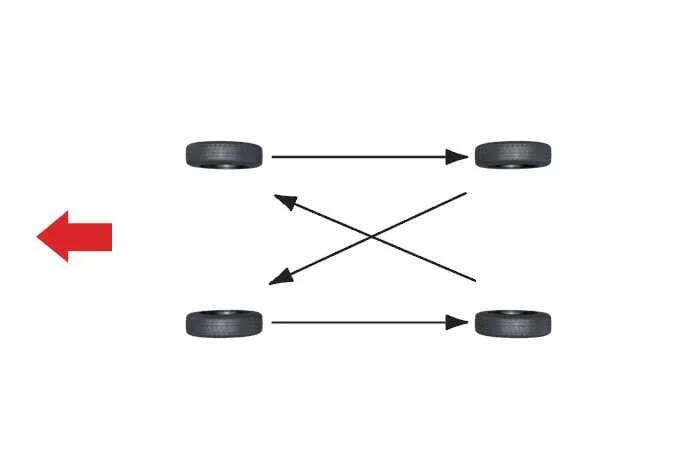
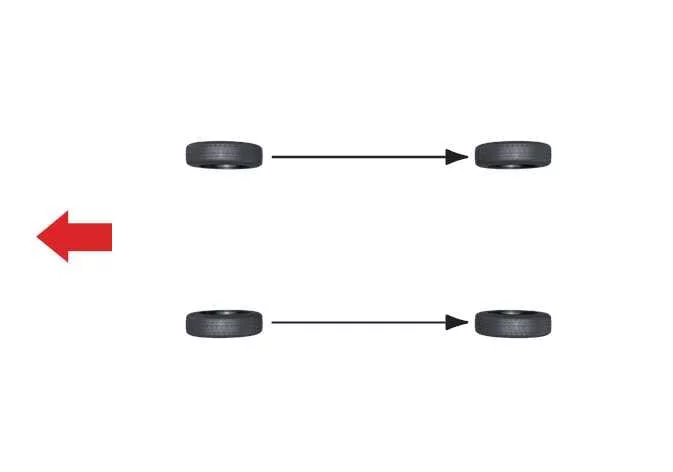
To ensure uniform tread wear and maximize the service life of your tires, it is recommended that you rotate the tires on your Kia K4 every 8,000 miles (13,000 km). However, you should perform this maintenance sooner if you observe signs of irregular or premature tread wear.
During every rotation service, it is also a best practice to have a technician check the wheels for correct balance to maintain a smooth driving experience.
While rotating the tires of your Kia K4, thoroughly inspect each one for uneven wear patterns or physical damage. Abnormal wear is frequently a symptom of incorrect tire inflation pressure, improper wheel alignment, out-of-balance wheel assemblies, aggressive braking, or frequent high-speed turning. Carefully scan the tread surface and the sidewalls for any signs of bumps, bulges, or separations. If any such conditions are detected, replace the tire immediately. Furthermore, if the internal fabric or steel cords are visible, the tire must be replaced without delay. Once the rotation is complete, verify that all tire pressures are adjusted to the manufacturer's specification and ensure that the lug nuts are tightened to the correct torque value of 79–94 lb-ft (11–13 kgf·m).
For additional details, please consult the "Tires and wheels" section of your manual. Additionally, use every tire rotation as an opportunity to have a qualified technician inspect the thickness and condition of your disc brake pads.
|
|
Note that if your Kia K4 is equipped with radial tires featuring an asymmetric or directional tread pattern, rotation should be performed only from front to rear on the same side, rather than in a crisscross pattern.
NOTE
Mixing tire types
Do not mix bias-ply and radial-ply tires on your Kia K4 under any circumstances. Mixing different tire constructions can cause unpredictable vehicle handling and stability issues.
Tire traction
Driving on tires with insufficient tread depth, incorrect inflation pressure, or traveling over slippery road surfaces will significantly reduce your tire traction. Always replace your tires as soon as the tread wear indicators become visible. During adverse weather conditions such as rain, snow, or ice, reduce your speed to maintain a safe margin of control and minimize the risk of hydroplaning or losing vehicle stability.
Tire replacement
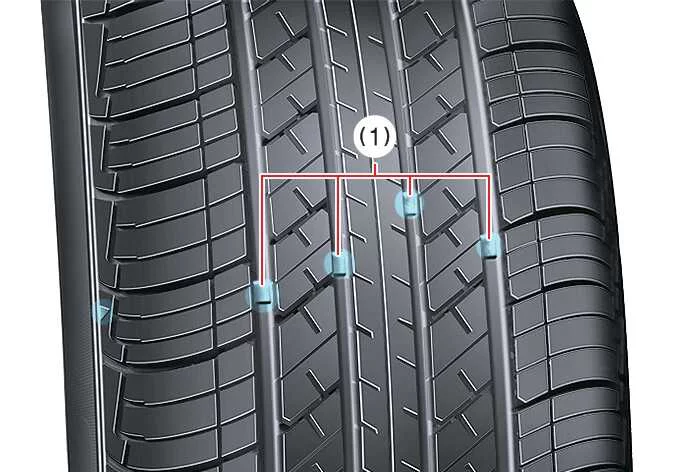
When tread wear is even, a "tread wear indicator" will appear as a solid band of rubber running across the width of the tread.
|
|
This indicator provides a clear visual signal that less than 1/16 in (1.6 mm) of tread depth remains. For your safety, replace the tires immediately once this indicator is detected. Do not wait for the band to appear across the entire tread circumference before scheduling a replacement.
The Anti-lock Brake System (ABS) and Electronic Stability Control (ESC) on your Kia K4 operate by comparing wheel rotation speeds. Because tire size directly influences wheel speed, all four tires must be of the same size and specifications as those originally supplied by the factory. Utilizing tires of a different size or circumference can prevent these safety systems from functioning correctly.
It is strongly recommended to replace all four tires simultaneously. If this is not feasible, replace the two front or two rear tires as a matched pair. Replacing only a single tire can seriously compromise the handling dynamics and safety of the Kia K4.
NOTE
When replacing tires, always select the same type, brand, and model of tires as originally supplied with your Kia K4 to ensure your vehicle retains the driving performance and safety characteristics intended by the manufacturer.
Wheel replacement
When the time comes to replace the metal wheels on your Kia K4 for any reason, it is critical to ensure that the replacement wheels are strictly equivalent to the original factory units. This means they must match the original specifications for diameter, rim width, and offset exactly.
Installing wheels of an incorrect size can have a significant and negative impact on various vehicle systems. This includes reducing the service life of your wheel bearings and suspension components, compromising braking performance, altering the driving dynamics of the Kia K4, and reducing ground clearance. Furthermore, improper sizing can lead to dangerous body-to-tire interference, insufficient clearance for snow chains, and inaccuracies in your speedometer and odometer calibration. It may also adversely affect the aim of your headlamps and the legal height of your vehicle's bumpers.
CAUTION
Wheel specifications
Wheels that do not meet the precise engineering specifications set by Kia may not seat properly on the hub. This can lead to severe damage to your Kia K4, irregular handling characteristics, and a dangerous loss of vehicle control.
All-season tires
Kia equips many models, including the Kia K4, with all-season tires to provide reliable, year-round performance across a diverse range of driving conditions, including light snow and icy surfaces.
You can identify these versatile tires by the "ALL SEASON" or "M+S" (Mud and Snow) markings molded directly into the tire sidewall. While all-season tires are highly capable, dedicated snow tires provide superior traction in extreme winter climates and may be a more appropriate choice for drivers residing in areas with heavy snowfall.
Summer tires
Kia utilizes high-performance summer tires on certain trim levels of the Kia K4 to provide superior grip, handling, and braking performance on dry and warm road surfaces.
It is important to note that the performance of summer tires is substantially diminished when driving on snow or ice. Summer tires do not feature the "M+S" (Mud and Snow) rating on the sidewall. If you reside in or plan to travel through regions with winter conditions, Kia strongly recommends swapping your summer tires for a full set of dedicated snow tires or all-season tires on all four wheels to maintain safe levels of traction.
Snow tires
If you choose to equip your Kia K4 with dedicated snow tires, they must be the same size and possess the same load capacity rating as the original equipment tires supplied with the vehicle. For safety and consistent handling, snow tires must be installed on all four wheels; using them on only one axle can lead to dangerously unbalanced vehicle dynamics.
To compensate for the characteristics of winter tires, inflate them to 4 psi (28 kPa) above the standard cold tire pressure recommended on the Kia K4 tire information label (found on the driver-side center pillar), provided this does not exceed the maximum pressure rating molded onto the tire sidewall itself.
For your safety, do not drive at speeds exceeding 75 mph (120 km/h) when your Kia K4 is equipped with dedicated winter snow tires.
WARNING
Summer tire limitations
Do not attempt to use summer tires at temperatures below 45 °F (7 °C), or when driving on snow and ice. At these lower temperatures, the rubber compound in summer tires loses its natural elasticity, leading to a significant reduction in grip and braking efficiency. You should change to winter or all-season tires—identified by the "M+S" marking—that match your standard tire size. Operating summer tires in sub-freezing temperatures can cause micro-cracking to form in the rubber compound, resulting in permanent structural damage to the tires.
Tire chains
If you find that tire chains are necessary due to severe winter conditions, they must be installed exclusively on the front wheels of your Kia K4. Always ensure that the chains are installed strictly in accordance with the manufacturer's specific instructions to ensure both security and effectiveness.
To minimize unnecessary wear on your tires and the chains themselves, remove the chains immediately once you reach road conditions where they are no longer required.
-
When driving your Kia K4 on snow- or ice-covered roads with chains installed, maintain a cautious speed below 20 mph (30 km/h).
-
Ensure you are utilizing SAE "S" class chains or approved wire-type chains designed for modern passenger vehicles.
-
If you hear any metallic noise indicating that the chains are making contact with the bodywork or suspension components of your Kia K4, stop safely and retighten the chains immediately to prevent damage.
-
To prevent potential damage to the vehicle's body, fenders, or brake lines, make a habit of checking and retightening the chains after driving the first 0.3–0.6 miles (0.5–1.0 km).
-
Avoid using bulky tire chains on vehicles equipped with aluminum alloy wheels, as they can scratch or damage the finish. In unavoidable circumstances, use only a slim wire-type chain.
-
Always use wire-type chains with a link thickness of less than 0.47 inches (12 mm) to ensure proper clearance and prevent damage to the chain connection points or vehicle wheel wells.
Radial-ply tires
The Kia K4 is engineered with radial-ply tires, which are designed to offer significantly improved tread life, greater resistance to road hazards, and a smoother, more stable ride at high speeds.
The radial-ply tires selected for the Kia K4 feature a reinforced belted construction specifically tuned to complement the vehicle's unique suspension geometry and handling characteristics. While radial-ply tires share the same load-carrying capacity and recommended inflation pressure as bias-ply or bias-belted tires of an equivalent size, their internal structure is fundamentally different.
Never mix radial-ply tires with bias-ply or bias-belted tires on the same vehicle. Combining these different tire constructions will severely deteriorate the handling, steering response, and stability of your Kia K4. For your safety and to maintain the integrity of the drivetrain, always use identical radial-ply tires as a complete set of four.
While radial tires are known for their longevity, they can be susceptible to irregular tread wear if not maintained properly. To maximize the tread life potential, strictly follow the tire rotation interval outlined in this manual. Please be aware that cuts and punctures in radial-ply tires can typically only be repaired within the tread area due to the extreme flexing of the sidewalls. Always consult a professional tire dealer to assess whether a damaged radial tire can be safely repaired.
Maintenance Tip: Regularly checking your Kia K4 tire pressure and following the recommended rotation schedule will ensure that your radial tires provide the performance and comfort you expect from your vehicle.
Low aspect ratio tires
Certain Kia K4 trim levels may be equipped with low aspect ratio tires, defined as tires with an aspect ratio lower than 50. These are specifically selected to enhance the vehicle's sporty appearance and improve overall aesthetic appeal.
While low aspect ratio tires are engineered to optimize handling precision and braking performance, it is important to note that their shorter sidewalls can result in a firmer, less compliant ride quality compared to standard tires. Drivers may also notice a slight increase in road noise during highway driving when the Kia K4 is fitted with this tire type.
NOTE
Due to the reduced height of the sidewall in low aspect ratio tires, the wheel rim and the tire structure itself are more susceptible to impact damage. To protect your Kia K4 investment, please follow these professional recommendations:
-
When navigating rough or unpaved roads, exercise extreme caution to avoid high-impact scenarios. Always perform a visual inspection of your Kia K4 tires and wheels immediately after driving on difficult terrain.
-
Approach potholes, speed bumps, manhole covers, and curbs at a very low speed. Hitting these obstacles with momentum can cause catastrophic damage to the tire sidewall and the alloy wheel rim.
-
If your Kia K4 sustains a significant impact from road debris or a road imperfection, have the tire condition professionally assessed at an authorized Kia dealer immediately, even if there is no obvious external damage.
-
To proactively prevent damage, inspect the physical condition and maintain the manufacturer-recommended inflation pressure of your tires at least every 1,900 miles (3,000 km).
-
Internal tire damage is often difficult to detect visually. If you suspect an impact has occurred, have the tire inspected or replaced by a professional. Hidden internal damage can lead to sudden air leaks, slow deflation, or tire blowouts while driving.
-
Please be aware that damage resulting from driving on rough roads, off-road conditions, or from striking potholes, manhole covers, or curbs is generally not covered under the manufacturer's warranty.
-
Detailed tire specifications and performance information can always be found embossed on the tire sidewall for your reference.
By following these maintenance guidelines, you will help ensure the longevity of your tires and wheels, maintaining the performance and safety standards of your Kia K4 in all driving conditions.


Other information:
Kia K4 (CL4) 2025-2026 Owner's Manual: Vehicle load limit
Understanding your Kia K4 vehicle load limit is essential for maintaining safety, handling performance, and fuel efficiency. You can find the specific load capacity details for your Kia K4 on the Tire and Loading Information label located on the driver-side door sill. Tire and loading information label This label provides critical data, including the original factory tire size, the recommended cold tire inflation pressures for your Kia K4, the maximum number of occupants allowed, and the total vehicle capacity weight.Kia K4 (CL4) 2025-2026 Owner's Manual: Forward Attention Warning (FAW):
The Forward Attention Warning (FAW) system utilizes an in-cabin camera in your Kia K4 to detect driver distraction. If the system observes that you are not focusing on the road, it provides immediate audible and visual alerts. Detecting sensor In-cabin camera The image above highlights the precise location of the Kia K4 in-cabin camera responsible for tracking driver gaze.
Contents
- Tire terminology and definitions
- Tire sidewall labeling
- Wheel size designation
- Tire speed ratings
- Tread wear
- Traction: AA, A, B, and C
- Temperature: A, B, and C
- Checking tire inflation pressure
- Tire maintenance
- Wheel alignment and tire balance
- Tire rotation
- Tire traction
- Tire replacement
- Wheel replacement
- All-season tires
- Summer tires
- Snow tires
- Tire chains
- Radial-ply tires
- Low aspect ratio tires
Categories
- Manuals Home
- Kia K4 Owners Manual
- Questions & Answers
- Video Guides
- Useful Resources
- New on site
- Most important about Kia K4
- Privacy Policy
