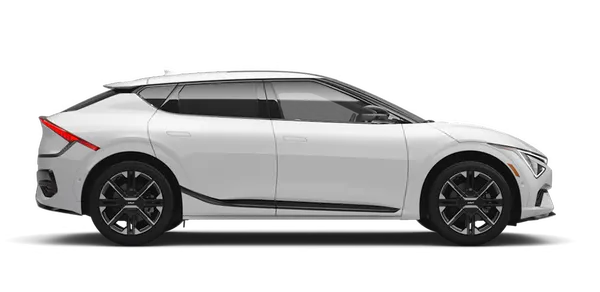
Kia K4: Forward Collision-Avoidance Assist malfunction and limitations / Junction Crossing, Lane-Change Oncoming, Lane-Change Side, Evasive Steering Assist function:
These advanced assistance functions in the Kia K4 may experience abnormal operation or unexpected deactivation under certain circumstances, including:
The ambient temperature surrounding the front or rear-side radar sensors is outside of the safe operating range (too high or too low).
You have installed a trailer, aftermarket rack, or carrier in close proximity to the rear corner radar sensors, potentially blocking their field of view.
The operational efficiency of the Kia K4 safety systems, including advanced collision avoidance, can be compromised under various environmental and traffic conditions. Please be aware that the system's performance may be limited when:
-
The front or rear corner radar sensors are obstructed by snow, heavy rain, thick mud, or other accumulated debris.
-
The vehicle's bumper, specifically near the radar sensors, is covered or modified with items such as bumper stickers, brush guards, aftermarket bike racks, or other attachments that interfere with sensor waves.
-
The bumper near the radar assembly has sustained physical damage, or the radar sensor itself has shifted out of its precise factory alignment.
-
The radar's field of view is physically blocked by stationary objects such as concrete walls, pillars, or other parked vehicles.
-
You are navigating highway entrance or exit ramps, where road geometry can confuse detection algorithms.
-
Driving along roads lined with tall guardrails, concrete barriers, or tunnel walls, which may reflect radar signals.
-
Another vehicle or motorcycle is following your Kia K4 extremely closely or performs a high-speed passing maneuver.
-
You are in the process of overtaking another vehicle or motorcycle, or if you are accelerating at an identical speed to traffic in the adjacent lane, which makes it harder for the Kia K4 to isolate the object.
-
Other traffic merges into or departs from your current lane, or you execute a lane change in close proximity to another vehicle.
-
The system detects non-standard targets, such as motorcycles, bicycles, flat-bed trailers, large commercial buses, heavy trucks, or small obstacles like animals, shopping carts, and strollers.
-
The system detects a vehicle with an unusually low profile, such as a specialized sports car.
-
Road lane markings are obscured by environmental factors like oil spills, puddles, sand, or dust, or are otherwise worn and indistinct.
-
Roadwork or complex infrastructure results in confusing lane markings, such as zigzag lines, merging lanes, or areas where there are more than two marked lanes.
-
You are driving on excessively wide or narrow lanes, or if your view of the markings is blocked by the vehicle immediately ahead of your Kia K4.
TIP
For more comprehensive details regarding the specific detection boundaries and sensor precautions for rear-approaching vehicles, please consult the "Blind-Spot Collision-Avoidance Assist (BCA)" section of your owner's manual.
WARNING
Driving on a curved road requires extra caution, as the Kia K4 sensors may have difficulty maintaining a consistent lock on vehicles when the road geometry significantly alters the vehicle's heading relative to the lane.

|

|
Driving on a curved road
The Forward Collision-Avoidance Assist system in your Kia K4 may experience detection limitations when navigating curved roads. In these scenarios, the system might fail to identify vehicles, motorcyclists, pedestrians, or cyclists directly ahead, potentially leading to a lack of necessary warnings, automatic braking, or steering intervention. When traversing curves, you must remain vigilant, maintain a sufficient braking distance, and be prepared to take manual control of the steering and brake pedal to adjust your speed according to road conditions.
Additionally, while driving on a curve, the Forward Collision-Avoidance Assist may mistakenly detect a vehicle, motorcyclist, pedestrian, or cyclist that is actually in an adjacent lane or outside of your current path. If this occurs, the Kia K4 may issue an unnecessary warning or trigger unintended braking or steering assistance. Always actively monitor traffic conditions around your Kia K4 to ensure safety.

|
Driving on an incline
|
|
When driving uphill or downhill, the Forward Collision-Avoidance Assist system may not accurately detect obstacles ahead, as the changing pitch of the Kia K4 can adversely affect the performance of the front-facing sensors. In such instances, the system may fail to provide the necessary warning, braking, or steering assistance to prevent a collision.
Furthermore, the system’s Emergency Braking feature might activate abruptly if it suddenly detects a vehicle, motorcyclist, pedestrian, or cyclist that enters the sensor’s field of view on an incline. To maintain the highest level of safety, always keep your eyes on the road, manually manage your speed via the brake pedal, and ensure you maintain a safe following distance between your Kia K4 and the vehicles in front of you.
Changing lanes

|
|
When a vehicle or motorcyclist (2) maneuvers into your lane from an adjacent lane, the Forward Collision-Avoidance Assist system will only be able to detect them once they have entered the established detection range of the Kia K4 sensors. Due to the nature of sudden lane changes, the system may not provide an immediate reaction. In such dynamic traffic environments, you must consistently maintain a safe braking distance, remain prepared to steer your Kia K4, and engage the brake pedal to manage your speed effectively.

|
|
|
|
|
When a vehicle (2) directly ahead of your Kia K4 merges into a different lane, the Forward Collision-Avoidance Assist system may experience a slight delay in detecting a vehicle or motorcyclist (3) that was previously obscured and is now directly in your path. In such traffic dynamics, it is critical that you maintain a safe braking distance. Always remain prepared to manually steer your Kia K4 and engage the brake pedal to reduce your speed if the system does not react as quickly as the situation demands.
Detecting a vehicle

|
Drivers of the Kia K4 should exercise heightened caution when following vehicles that have cargo extending significantly backward from the cab, or vehicles that possess exceptionally high ground clearance. The Forward Collision-Avoidance Assist system may struggle to detect these specific cargo configurations accurately. In these instances, you are solely responsible for maintaining a safe braking distance from the rearmost point of the cargo or the vehicle itself. If necessary, actively steer your Kia K4 and depress the brake pedal to ensure your speed remains appropriate for the current traffic flow.
TIP
-
For safety reasons, please ensure that the Forward Collision-Avoidance Assist feature is turned OFF whenever your Kia K4 is towing a trailer or another vehicle.
-
Be aware that the Forward Collision-Avoidance Assist system may occasionally activate if it incorrectly identifies stationary objects or infrastructure that share visual characteristics with vehicles, motorcyclists, or pedestrians.
-
The Forward Collision-Avoidance Assist system is not programmed to activate for shopping carts, bicycles, or similar objects being manually pushed or pulled by individuals.
-
Performance of the Forward Collision-Avoidance Assist may be degraded if your Kia K4 is subjected to strong electromagnetic interference.
-
Upon starting the vehicle or initializing the front view camera, please note that the Forward Collision-Avoidance Assist system may require up to 15 seconds before it becomes fully active and ready to detect hazards.
TIP
For more comprehensive information regarding the specific detection limitations of the rear corner radar, as well as essential safety cautions concerning the rear sensor suite, please refer to the "Blind-Spot Collision-Avoidance Assist (BCA)" section of your owner's manual.
This device complies with Part 15 of the FCC rules.
Operation of your Kia K4 safety equipment is subject to the following two conditions:
-
This device may not cause harmful interference, and
-
This device must accept any interference received, including interference that may cause undesired operation of the system.
TIP
Please note that any changes or modifications to the vehicle's electronic systems that are not expressly approved by the party responsible for compliance could void your authority to operate the equipment in your Kia K4.


Other information:
Kia K4 (CL4) 2025-2026 Owner's Manual: Tire Pressure Monitoring System (TPMS)
The Kia K4 is equipped with a sophisticated Tire Pressure Monitoring System (TPMS) that continuously monitors the inflation pressure of each tire and transmits this data to the instrument cluster for your convenience. Low tire pressure or TPMS malfunction indicator light.Kia K4 (CL4) 2025-2026 Owner's Manual: Smart Cruise Control display and control
You can conveniently monitor the current status and operational state of the Smart Cruise Control (SCC) system by navigating to the "Driving Assist" view on your Kia K4 instrument cluster. For further details on customizing these views, please refer to your owner's manual section on LCD display modes. The Kia K4 instrument cluster provides clear visual feedback regarding the SCC status through various indicators: When the system is active and operating: Shows whether a lead vehicle is detected ahead and highlights the current vehicle-to-vehicle distance level setting.